
Ever wondered why restaurant curries taste so rich and flavorful? The secret lies in curry sauce. Curry sauce is a rich spice-based sauce used in cuisines around the world. Made from a blend of aromatics, spices and a liquid base, it transforms simple ingredients into flavorful dishes. From India to Thailand curry sauce comes in many styles each with its own taste, texture and ingredients. Once you understand the basics you can easily adapt it to your own taste. Try this and you can make simple homemade curry sauce recipe to get started.
What Is Curry Sauce Made Of ?
Curry sauce is made by combining three essential elements: aromatics, spices, and a liquid base. Aromatics like onions, garlic, and ginger create the foundation of flavor, while spices such as turmeric, cumin, and coriander add depth, color and aroma. Chili peppers are often included to control the level of heat.
The liquid base is what brings everything together into a smooth sauce. Depending on the region, this can include coconut milk, tomatoes, cream, yogurt, or broth. The balance of these ingredients determines whether a curry sauce is creamy, spicy, mild, or rich in flavor.

Types of Curry Sauce
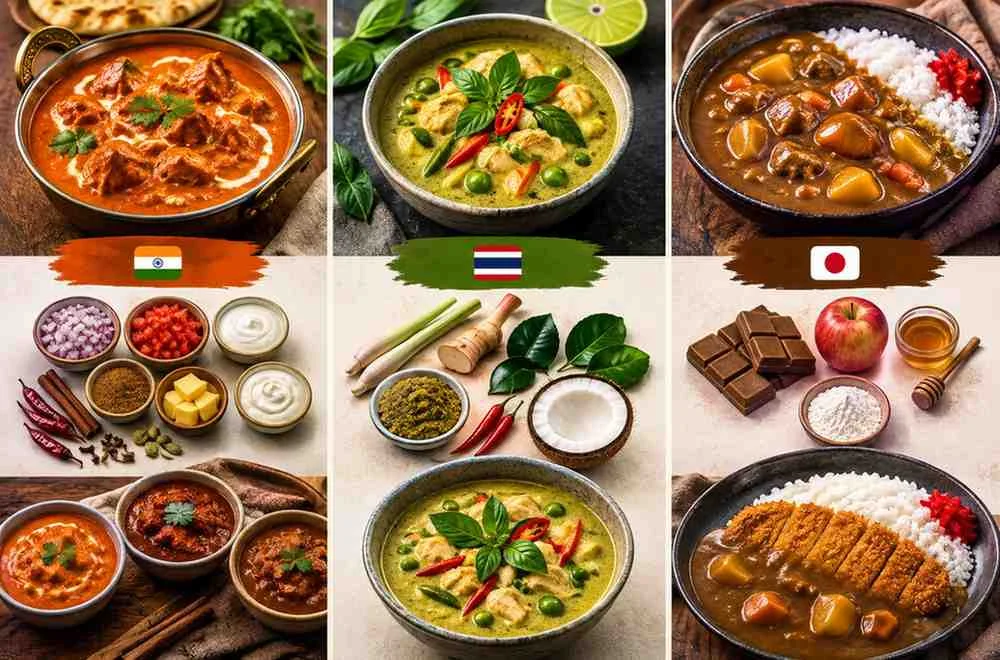
Indian curry gravy
In India, curry sauces are rich, bold, and deeply spiced. They typically use a base of onions, tomatoes, yogurt, or cream and are flavored with spice blends like garam masala. For a tangy and slightly bold variation, you can also try this masterpiece mustard curry sauce recipe which offers a unique twist on traditional flavors
Popular examples include butter chicken, vindaloo, and rogan josh each offering a unique balance of richness, heat, and aroma.
Thai curry base
Curry sauces from Thailand are lighter and more aromatic. They are made using curry pastes prepared from fresh ingredients such as lemongrass, galangal, and kaffir lime leaves, then combined with coconut milk. Green curry sauce are the most common types of it.

Japanese curry base
In Japan, curry sauce is thicker, milder, and slightly sweet. It is made using a roux and often includes ingredients like apple or honey to enhance its flavor. If you’d like to make it at home, try our homemade Japanese curry sauce for a rich, authentic version.
It is commonly served with rice or dishes like katsu curry, making it a popular comfort food.If you are new to curry, start with a mild Japanese or creamy Indian curry before trying spicier Thai versions.
What Does Curry Sauce Taste Like?
Curry sauce has a rich, savory flavor that combines warm spices, aromatic herbs, and a creamy or tomato-based finish. Its taste can range from mild and slightly sweet to bold and spicy, depending on the ingredients and the style of curry. Common spices like turmeric, cumin, coriander, and garam masala give curry sauce its earthy, fragrant character, while ingredients such as garlic, ginger, and onions add depth and natural sweetness.
Common Ingredients in Curry Sauce
Although curry sauce recipes vary from one cuisine to another, most versions are made using a similar group of ingredients that work together to create their distinctive flavor and texture. Aromatics such as onions, garlic, and ginger form the base of the sauce, while spices like turmeric, cumin, coriander, and chili powder provide warmth, color, and depth. Many recipes also include garam masala or curry powder for a more balanced spice profile.
The liquid ingredients determine the final texture and taste of the sauce. Coconut milk creates a creamy, slightly sweet curry commonly found in Thai recipes, while tomatoes add acidity and richness to many Indian-style curries. Yogurt and cream are often used to make the sauce smoother and milder, helping balance spicy flavors. Fresh herbs such as cilantro or curry leaves may also be added as a finishing touch to enhance aroma and freshnes.

How Curry Sauce Gets Its Flavor
Curry sauce gets its character from the way aromatics, spices, fat, and liquid are layered during cooking. Onions, garlic, and ginger create a savory foundation, while spices such as cumin, coriander, turmeric, and chili add warmth, earthiness, color, and depth. Cooking these spices briefly in oil or ghee helps release their aroma and gives the sauce a fuller flavor.
The liquid base also shapes the final result. Tomatoes bring acidity and richness, coconut milk adds creamy sweetness, while yogurt, cream, or broth can create a smoother and more balanced sauce. Salt brings the individual flavors together, while a small amount of lemon or lime juice can brighten a rich curry and prevent it from tasting flat.

How curry base Is Made
This flavorful sauce is created by layering ingredients step by step. The process begins by heating oil or ghee, followed by adding whole spices to release their aroma. Aromatics such as onions, garlic, and ginger are then cooked until soft and fragrant.
Next, ground spices or curry paste are added and briefly cooked to enhance their flavor. Finally, the liquid base is poured in, and the mixture is simmered until it thickens into a rich, cohesive consistency. From experience cooking spices in oil first makes a huge difference because it unlocks their full flavor and aroma.

Popular uses of this flavorful sauce
This versatile sauce is used in a wide variety of dishes. It is commonly used to cook proteins like chicken, lamb, fish, or tofu, allowing them to absorb deep flavors.
It also pairs well with vegetables such as potatoes, cauliflower, and carrots, making it ideal for hearty plant-based meals. In places like the United Kingdom, it is even served as a dipping sauce for fries.
Beyond traditional uses, it can also be used as a marinade, a sauce for rice or noodles, or a base for soups and stews.
My Experience Making Curry Recipe At Home
After testing different curry sauces over the years, I found that slowly cooking onions for at least 12–15 minutes creates a richer flavor than rushing the process. Toasting spices in oil before adding liquids also makes a noticeable difference in aroma and depth. When using coconut milk, simmering gently rather than boiling helps maintain a smooth and creamy texture.
Pro Tips For Tasty Curry Sauce
1: Always cook spices in oil before adding liquid to unlock full flavor
2: Don’t rush onions cooking them properly builds the base taste
3: Use fat (oil, ghee, or coconut milk) to balance strong spices
Adjust thickness by controlling the liquid, not by adding flour
FAQs ?
Question 1: What does curry sauce taste like?
Ans: Curry sauce has a complex flavor that can be savory, spicy, creamy, or slightly sweet depending on the ingredients and style.
Question 2: Can you make curry sauce at home?
Ans: Yes, curry sauce is easy to make at home and can be customized based on your preferred flavors and spice level.
Final Thoughts
This globally loved sauce combines spices, aromatics, and technique to create rich and satisfying dishes. Whether you prefer bold flavors from India, fresh and aromatic curries from Thailand, or mild comfort dishes from Japan, understanding its basics allows you to cook a wide range of meals with confidence.