
Want a rich, smooth sauce that’s easy to make and works with almost anything? This coconut curry sauce recipe gives you a creamy, flavorful base that pairs perfectly with chicken, vegetables, seafood, or rice. With the right balance of spice, texture, and seasoning, it can quickly become one of the most versatile homemade sauces in your kitchen.
Coconut Curry Sauce Ingredients
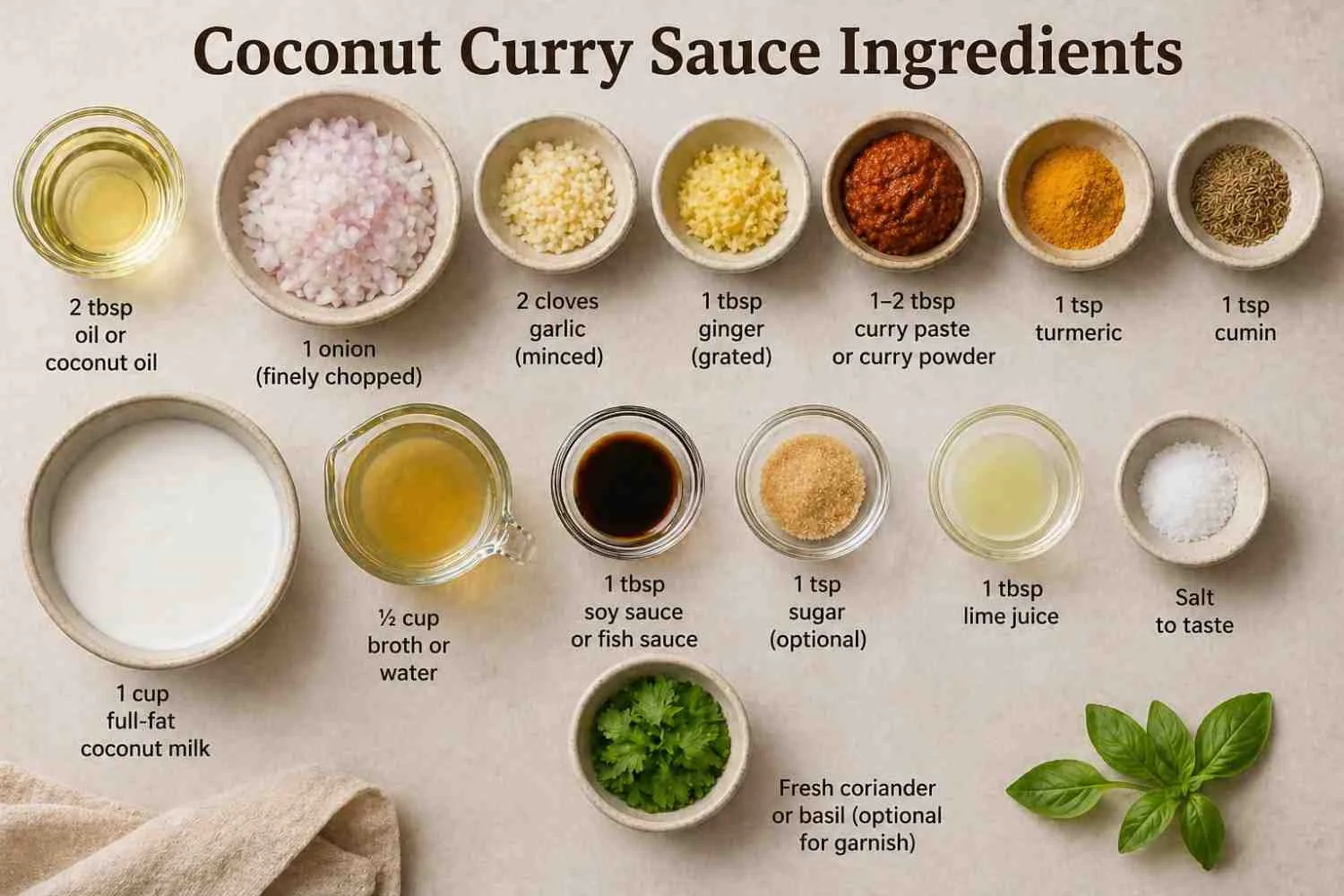
- 2 tbsp oil or coconut oil
- 1 onion (finely chopped)
- 2 cloves garlic (minced)
- 1 tbsp ginger (grated)
- 1–2 tbsp curry paste or curry powder
- 1 tsp turmeric
- 1 tsp cumin
- 1 cup full-fat coconut milk
- ½ cup broth or water
- 1 tbsp soy sauce or fish sauce
- 1 tsp sugar (optional)
- 1 tbsp lime juice
- Salt to taste
- Fresh coriander or basil (optional for garnish)
→ Full-fat coconut milk creates a smoother, richer sauce and gives better overall flavor
How to Make Coconut Curry Sauce
- Heat oil in a pan over medium heat
- Add onions and cook until soft and lightly golden
- Add garlic and ginger, then cook for 1 minute
- Stir in curry paste or curry powder, turmeric, and cumin
- Cook spices briefly to release aroma and depth
- Pour in coconut milk and stir until smooth
- Add broth or water and mix well
- Season with soy sauce or fish sauce
- Simmer gently for 10–15 minutes until creamy
- Finish with lime juice and adjust salt
→ From experience, cooking spices first is one of the biggest differences between a flat sauce and a deeply flavorful one
→ Keep heat moderate after adding coconut milk, as boiling too aggressively can affect texture and richness
Why This Method Works
- Slow-cooked onions create a balanced savory base
- Properly cooked spices release deeper flavor
- Coconut milk adds creamy body without overpowering spices
- Lime juice brightens richness and improves balance
→ This combination creates a sauce that tastes smooth, layered, and well-rounded rather than overly sweet or heavy
What Does Coconut Curry Sauce Taste Like?
- Creamy and rich
- Mildly sweet
- Warm and aromatic
- Balanced spice
- Smooth with fresh finishing notes
→ Coconut curry sauce is versatile because it can be mild and comforting or bold and spicy depending on your adjustments
How to Use Coconut Curry Sauce
- Add chicken, shrimp, tofu, or chickpeas
- Mix in vegetables like bell peppers, spinach, potatoes, or carrots
- Serve with rice, noodles, or naan
- Use as a simmer sauce for quick meal prep
→ This sauce works especially well because it easily adapts to both simple dinners and more layered meals
Customize Your Coconut Curry Sauce
1: For More Spice
- Add extra curry paste
- Add chili flakes or fresh chilies
2: For Milder Flavor
- Add more coconut milk
- Reduce curry paste
3: For More Freshness
- Add lime juice
- Use fresh basil or coriander
4: For Thicker Texture
- Simmer longer
- Reduce broth slightly
→ Small changes can dramatically shift flavor while keeping the base reliable
Why Coconut Curry Sauce Sometimes Tastes Bland
- Spices Were Not Bloomed Properly
Cooking spices in oil is essential.
- Missing Acid Balance
Without lime or vinegar, the sauce can feel too heavy.
- Too Much Liquid
Excess broth weakens flavor and texture.
- Coconut Milk
This often reduces richness and overall body.
→ A properly balanced coconut curry sauce should taste creamy, aromatic, and vibrant
Pro Tips for Better Coconut Curry Sauce
- Use full-fat coconut milk for best texture
- Cook aromatics slowly for better depth
- Simmer gently instead of boiling hard
- Add lime juice at the end
- Taste before serving and adjust salt carefully
→ From experience, gentle simmering protects texture better than aggressive heat
Common Mistakes to Avoid
- Using low-fat coconut milk
- Adding spices directly into liquid
- Boiling too hard after adding coconut milk
- Under-seasoning
- Skipping acidity
→ Most homemade coconut curry sauces improve dramatically with better balance, not more ingredients
How to Make It Thicker or Thinner
For Thicker Sauce
- Simmer longer
- Use less broth
- Add slightly more curry paste
For Thinner Sauce
- Add broth gradually
- Add water or extra coconut milk
→ The best texture should coat food smoothly without becoming watery
Popular Variations
1: Thai Inspired Coconut Curry
- Use red or green curry paste
- Add basil
2: Indian Inspired Coconut Curry
- Use curry powder, cumin, and coriander
3: Vegetarian Coconut Curry
- Replace fish sauce with soy sauce
- Add tofu or chickpeas
→ This flexibility is one reason coconut curry sauce remains so widely loved
FAQs
What is coconut curry sauce made of?
Coconut curry sauce is made with coconut milk, onion, garlic, ginger, spices, and seasoning for a creamy, balanced flavor.
Is coconut curry sauce spicy?
It depends on the curry paste or powder used. It can easily be adjusted from mild to spicy.
Why did my coconut curry sauce separate?
This often happens when it boils too aggressively. Gentle simmering helps maintain smooth texture.
Can I store coconut curry sauce?
Yes, refrigerate it for 3–4 days and reheat gently.
Final Thoughts
This coconut curry sauce recipe is creamy, flexible, and easy enough for everyday cooking while still delivering rich flavor. By focusing on proper spice cooking, balanced texture, and gentle heat, you can create a homemade sauce that feels both comforting and versatile. Once you master the base, it becomes one of the easiest sauces to customize for different meals and flavor styles.