
A good brown sugar meatloaf glaze recipe creates the rich, glossy topping that gives homemade meatloaf its classic comfort-food flavor. This version combines brown sugar, ketchup, mustard, Worcestershire sauce, and seasonings into a smooth glaze that becomes slightly sticky, caramelized, tangy, and savory while baking. After extensive testing, balanced sweetness and acidity consistently created the best flavor without overpowering the meat itself.
Brown Sugar Meatloaf Glaze Ingredients
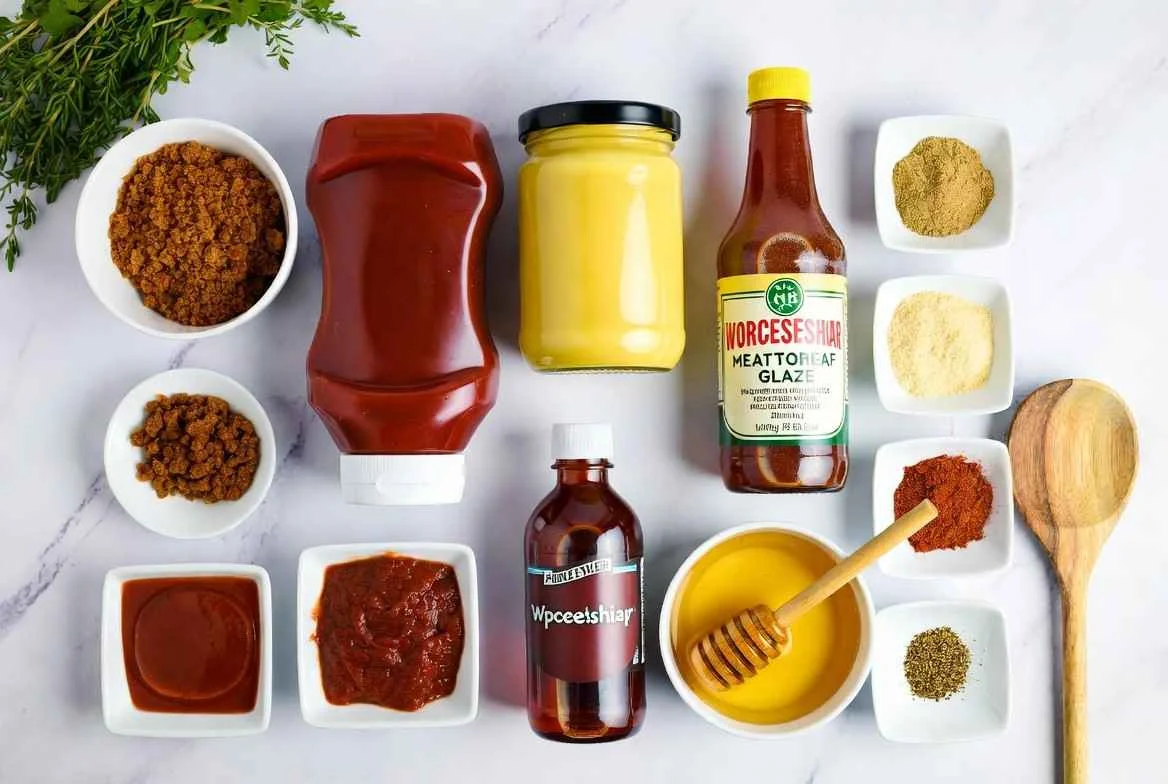
¾ cup ketchup
3 tablespoons brown sugar
1 tablespoon yellow mustard
1 tablespoon Worcestershire sauce
1 teaspoon apple cider vinegar
1 tablespoon tomato paste
½ teaspoon garlic powder
¼ teaspoon onion powder
¼ teaspoon smoked paprika
Small pinch black pepper
1 teaspoon honey (optional for extra caramelization)
→ Brown sugar creates deeper sweetness and richer glaze texture compared to white sugar.
How to Make Brown Sugar Meatloaf Glaze Step by Step

- Add Ingredients to a Saucepan
Place ketchup, brown sugar, mustard, Worcestershire sauce, vinegar, tomato paste, garlic powder, onion powder, smoked paprika, and black pepper into a small saucepan.
- Mix Until Smooth
Whisk thoroughly before heating.
→ Proper mixing helps dissolve brown sugar evenly and prevents grainy texture.
- Heat Slowly
Cook over low to medium-low heat for 4–5 minutes while stirring regularly.
The glaze should become:
Smooth
Glossy
Slightly thicker
Avoid high heat because brown sugar can darken too quickly.
- Taste and Adjust
Adjust depending on your preferred flavor profile.
For sweeter glaze:
Add small amount honey
For tangier flavor:
Increase mustard or vinegar slightly
For smokier depth:
Add little extra smoked paprika
For spicy variation:
add cayenne pepper or hot sauce
→ Balanced tanginess keeps the glaze from tasting overly sugary or heavy.
- Apply to Meatloaf
Brush a thin layer over the meatloaf before baking for spicy version of meatloaf glaze.
Apply another thicker layer during the final 15–20 minutes for better caramelization.
→ Double glazing creates richer flavor and the classic glossy meatloaf finish.
Cooking Tips for Better Brown Sugar Meatloaf Glaze
1: Use dark brown sugar for deeper flavor → It creates stronger molasses richness and darker caramelization.
2: Simmer gently → High heat may burn the sugars too quickly.
3: Add tomato paste for thicker texture → It improves richness and helps the glaze stick better.
4: Apply glaze in layers → Layering creates smoother caramelization and better coverage.
5: Taste before using → Sweetness levels vary depending on ketchup brands and brown sugar while creating meatloaf glaze recipe.
6: Warm the glaze before brushing → Warm glaze spreads more evenly over meatloaf.
7: Don’t skip acidity → Vinegar and mustard balance the sweetness.
8: Use Worcestershire sauce carefully → Even small amounts add major savory depth.
9: Avoid overly thin glaze → Thin glaze may slide off during baking.
10: Brush evenly → Uneven glaze application can create burnt spots.
How to Adjust Glaze Texture
For Thicker Glaze
Simmer slightly longer
Add extra tomato paste
Reduce added liquid
This creates:
Stickier texture
Stronger caramelization
Richer coating
For Thinner Glaze
add 1–2 teaspoons warm water
Add small splash vinegar
The glaze should spread smoothly while still coating the back of a spoon.
→ Proper thickness helps the glaze stay on the meatloaf instead of sliding off.
Storage Tips
Store leftover glaze in an airtight container:
Up to 5 days refrigerated
Up to 2 months frozen
Reheat gently before using again.
→ The flavor often tastes smoother after resting overnight because the ingredients blend more fully.
Best Baking Timing For Meatloaf Glaze Recipe
First Layer
Apply lightly before baking to help maintain moisture.
Second Layer
Apply another thicker layer during the final 15–20 minutes of meatloaf glaze recipe.
This helps:
Improve caramelization
Create glossy texture
Prevent burning
→ Applying heavy brown sugar glaze too early may cause excessive darkening during baking.
Troubleshooting Brown Sugar Meatloaf Glaze
Glaze Too Sweet
Add:
More mustard
Small amount vinegar
To improve balance.
Glaze Too Thick
Add:
Small splash warm water
While reheating gently.
Glaze Too Thin
Simmer longer or add:
Extra tomato paste
For better consistency.
Glaze Burns Quickly
Usually caused by:
High oven temperature
Too much sugar
Applying glaze too early
Apply heavier glaze layers later during baking.
Glaze Tastes Flat
Usually caused by missing acidity or savory depth.
Try adding In Meatloaf glaze recipe:
Worcestershire sauce
Mustard
Vinegar
Frequently Asked Questions
What does brown sugar do in meatloaf glaze?
Brown sugar adds sweetness, deeper caramelization, and glossy texture during baking.
Can I use light brown sugar?
Yes. Light brown sugar creates milder sweetness, while dark brown sugar creates deeper molasses flavor.
Why does meatloaf glaze need vinegar?
Vinegar balances sweetness and prevents the glaze from tasting too rich or sugary.
Can I make brown sugar meatloaf glaze ahead of time?
Yes. It stores very well and often tastes even better the next day.
What makes meatloaf glaze shiny?
Brown sugar, ketchup, and gentle simmering help create glossy texture during baking while creating meatloaf glaze recipe.
Conclusion
This meatloaf glaze recipe with brown sugar creates the perfect combination of sweetness, tanginess, savory depth, and glossy caramelized texture for homemade meatloaf. By combining ketchup, brown sugar, Worcestershire sauce, mustard, tomato paste and balanced seasonings, you can create a smooth homemade glaze that works perfectly for classic beef meatloaf, turkey meatloaf, meatballs, and comfort-food dinners. Once you master the base recipe, it becomes easy to customize into smoky BBQ, spicy, or extra-sweet variations depending on your preferred flavor profile.