
A great shawarma sauce can transform an ordinary wrap into something memorable. Whether you’re making garlic sauce, tahini sauce, yogurt sauce, white sauce, or spicy shawarma sauce, small mistakes can significantly affect flavor, texture, and consistency. Many homemade shawarma sauces fail not because of complicated techniques but because of simple preparation errors that are easy to overlook. Understanding these common shawarma sauce mistakes can help you create smoother, creamier, and more flavorful sauces every time.
Why Shawarma Sauce Matters
Shawarma sauce is more than just a topping. It helps balance the spices in the meat, adds moisture to wraps and sandwiches, and creates the creamy texture people expect from a good shawarma experience.
When a sauce is too thin, too thick, overly acidic, bland, or separated, it can affect the entire dish. Fortunately, most shawarma sauce problems are easy to prevent once you know what causes them.
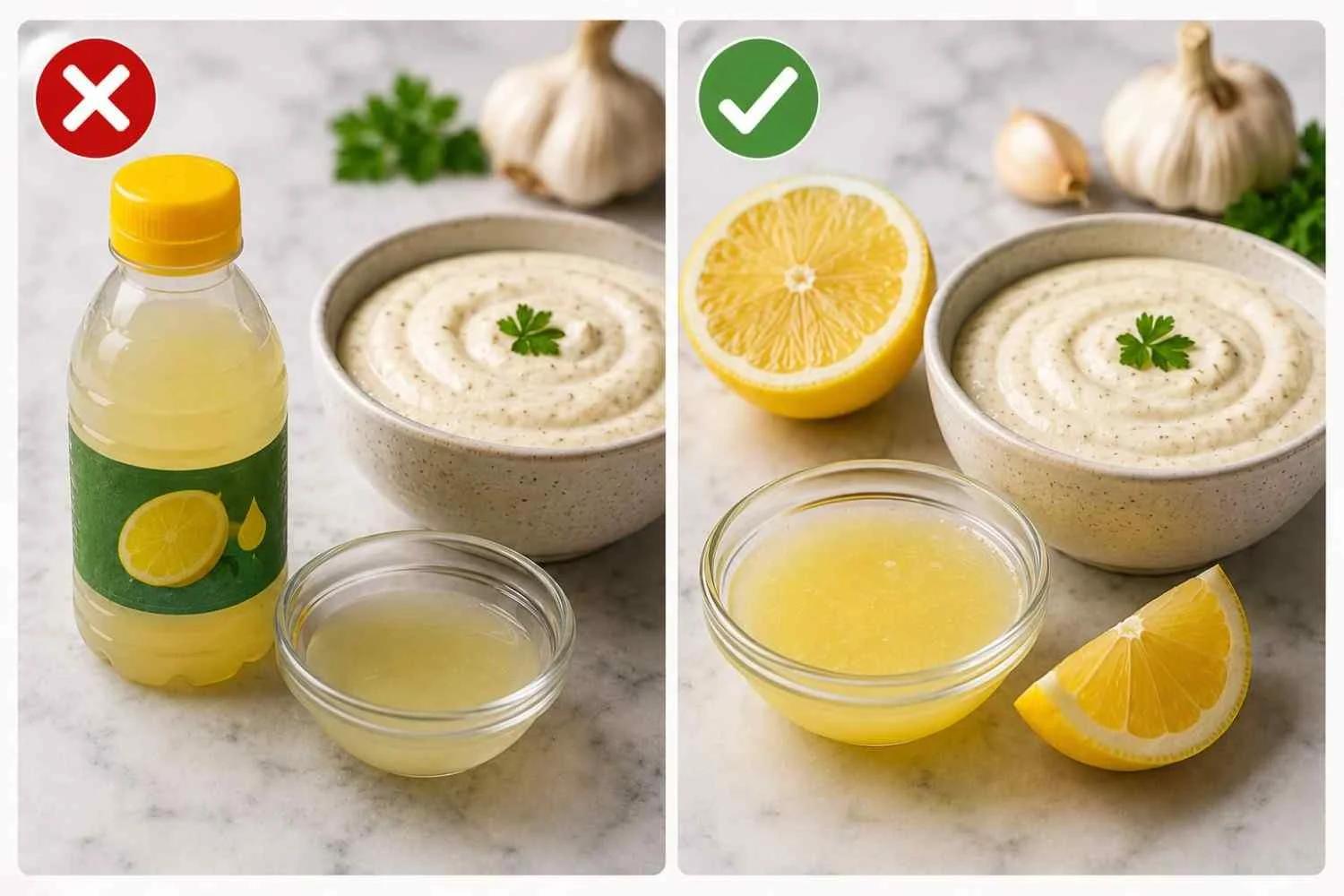
1. Using Bottled Lemon Juice Instead of Fresh Lemon Juice
One of the most common mistakes is relying on bottled lemon juice.
Fresh lemon juice provides brightness and natural acidity that bottled products often cannot match. During repeated recipe testing, fresh lemons consistently produced cleaner flavor and better balance.
Bottled lemon juice may sometimes introduce a harsher acidic taste that can overpower delicate ingredients.
Better Solution
Use freshly squeezed lemon juice whenever possible for the best flavor.
2. Adding Too Much Garlic
Garlic is one of the defining ingredients in many shawarma sauces, but excessive garlic can easily overwhelm the entire recipe.
Many home cooks assume more garlic automatically means better flavor. In reality, too much garlic can mask the other ingredients and create an unbalanced sauce.
Better Solution
Start with a moderate amount and adjust gradually after tasting.

3. Using Low-Quality Garlic
Fresh garlic plays a major role in the final flavor of shawarma sauce.
Older garlic cloves often develop bitterness and lose some of their natural aroma. This can negatively affect both traditional garlic sauces and yogurt-based sauces.
Better Solution
Use firm, fresh garlic cloves with no signs of sprouting or drying.
4. Skipping Refrigeration Time
Many people serve shawarma sauce immediately after mixing.
While the sauce may taste acceptable right away, allowing it to rest usually produces noticeably better results.
During testing, sauces chilled for at least 20 to 30 minutes consistently developed smoother and more balanced flavor.
Better Solution
Refrigerate the sauce before serving whenever possible.
5. Using Thin Yogurt
Yogurt-based shawarma sauces depend heavily on texture.
Regular yogurt often contains more moisture than Greek yogurt, which can result in a thinner sauce that struggles to coat wraps and sandwiches properly.
Better Solution
Choose full-fat Greek yogurt for thicker consistency.

6. Ignoring Ingredient Temperature
Temperature can affect the texture of certain shawarma sauces, especially garlic emulsions and yogurt-based recipes.
Ingredients that vary dramatically in temperature sometimes create inconsistent results.
Better Solution
Allow ingredients to reach a similar temperature before mixing.
7. Adding Too Much Lemon Juice
Lemon juice contributes freshness and balance, but excessive amounts can dominate the sauce.
A sauce that becomes overly acidic may lose its creamy character and overshadow the shawarma itself.
Better Solution
Add lemon juice gradually and taste frequently.
8. Overusing Salt
Salt helps bring flavors together, but too much can quickly make a sauce unpleasant.
This issue commonly occurs when additional salty ingredients are already present.
Better Solution
Season slowly and adjust near the end of preparation.
9. Using Strong-Flavored Oils
Certain oils contribute strong flavors that can interfere with traditional shawarma sauce profiles.
For example, heavily flavored oils may compete with garlic, tahini, herbs, or yogurt.
Better Solution
Use neutral oils such as sunflower, canola, or vegetable oil when appropriate.
10. Rushing Garlic Emulsions
Traditional garlic sauces such as toum depend on emulsification.
One of the most common causes of failure is adding oil too quickly.
When the oil is introduced faster than the garlic can absorb it, the sauce may separate.
Better Solution
Drizzle oil slowly while blending continuously.
11. Over-Blending Herb-Based Sauces
Green shawarma sauces rely on fresh herbs such as cilantro, parsley, and mint.
Over-processing these herbs can sometimes reduce their freshness and create a duller flavor profile.
Better Solution
Blend only until the ingredients become smooth.
12. Using Dried Herbs Instead of Fresh Herbs
Fresh herbs contribute significantly more flavor and aroma than dried herbs in green shawarma sauces.
During recipe testing, fresh cilantro, parsley, and mint consistently produced brighter flavor and more vibrant color.
Better Solution
Use fresh herbs whenever possible.
13. Making the Sauce Too Thick
A thick sauce may seem desirable, but excessive thickness can create practical problems.
It may become difficult to spread evenly inside wraps or drizzle over shawarma bowls.
Better Solution
Adjust consistency with small amounts of water or lemon juice.
14. Making the Sauce Too Thin
Thin sauces often run out of wraps and fail to coat ingredients properly.
This problem commonly occurs when too much liquid is added at once.
Better Solution
Add liquids gradually while monitoring texture.
15. Not Tasting Before Serving
Perhaps the most overlooked mistake is failing to taste the sauce before serving.
Every batch of garlic, lemon juice, yogurt, and herbs can vary slightly in intensity.
Small adjustments often make a major difference in the final result.
Better Solution
Always taste and adjust seasoning before serving.
Why Homemade Shawarma Sauces Sometimes Taste Different
Many people wonder why homemade shawarma sauce tastes different from restaurant versions.
Several factors contribute:
Ingredient Quality
Restaurants often use fresh ingredients in large quantities and prepare sauces frequently.
Resting Time
Many commercial sauces are allowed to rest before serving.
Consistency Control
Professional kitchens carefully monitor texture and ingredient ratios.
Repetition
Repeated preparation allows cooks to refine their technique over time.
Fortunately, understanding common mistakes helps home cooks achieve similar results.
Signs Your Shawarma Sauce Is Balanced
A properly made shawarma sauce should have:
- Smooth texture
- Balanced seasoning
- Pleasant aroma
- Appropriate thickness
- Fresh flavor
- Consistent appearance
No single ingredient should dominate the entire sauce.
Instead, garlic, acidity, herbs, spices, and creaminess should work together.
Tips for Better Shawarma Sauce Every Time
Use Fresh Ingredients
Fresh garlic, herbs, and lemon juice create significantly better flavor.
Measure Carefully
Consistent measurements produce more predictable results.
Chill Before Serving
Resting improves flavor development.
Adjust Gradually
Small changes are easier to manage than major corrections.
Keep It Balanced
Avoid allowing any single ingredient to overwhelm the others.
FAQs
Why does my shawarma sauce taste too strong?
This often happens when too much garlic, lemon juice, or seasoning is added. Adjusting the balance with additional yogurt, mayonnaise, or other base ingredients can help.
Why is my shawarma sauce watery?
Watery sauce usually results from thin yogurt, excess liquid, or insufficient thickening ingredients.
Why did my garlic sauce separate?
Garlic sauce often separates when oil is added too quickly during emulsification. Slow incorporation helps create a stable texture.
Conclusion
Understanding these common shawarma sauce mistakes can dramatically improve the quality of homemade sauces. From choosing fresh ingredients and balancing acidity to properly chilling and adjusting texture, small details often make the biggest difference. Whether you’re preparing garlic sauce, tahini sauce, yogurt sauce, green sauce, or spicy shawarma sauce, avoiding these mistakes will help you create smoother, creamier, and more flavorful results every time.