
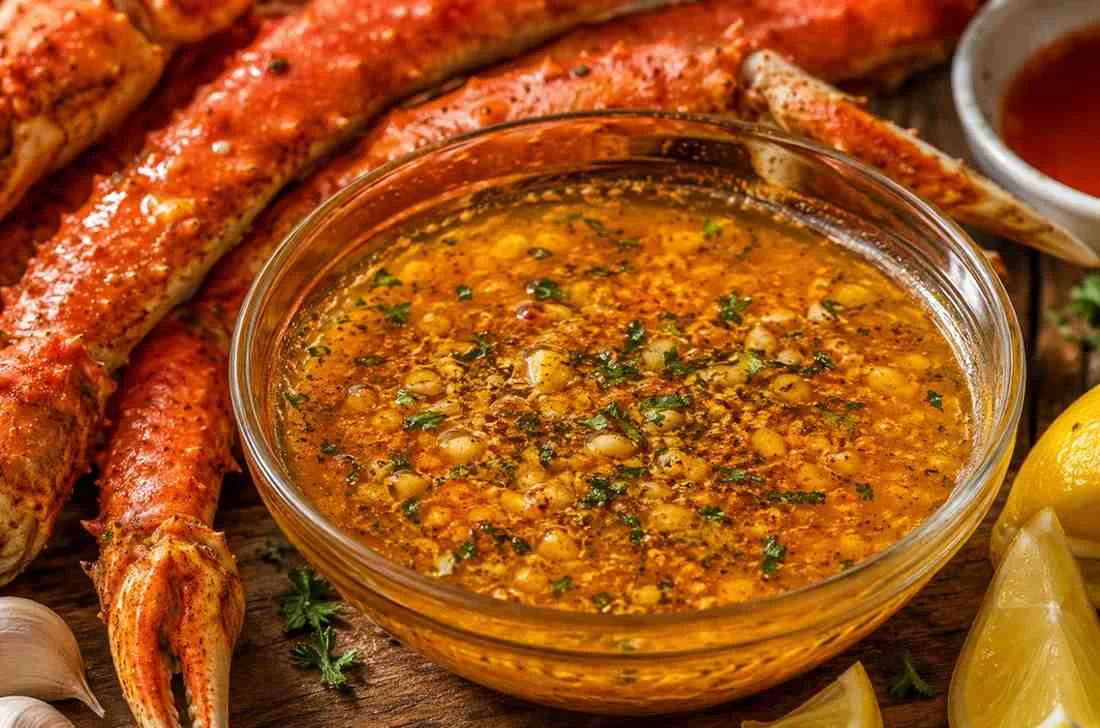
A good boiling crab sauce should be rich, buttery, garlicky, and flavorful enough to coat crab without completely hiding its natural sweetness. This homemade seafood boil sauce is designed for crab legs, crab clusters, shrimp, crawfish, lobster, or a full seafood boil. You can spoon it over cooked seafood, use it as a dipping sauce, or toss the seafood directly in the sauce for a restaurant-style finish. The heat is easy to adjust, so you can make it mild, spicy, or somewhere in between.
Recipe Overview
| Detail | Information |
| Prep Time | 5 minutes |
| Cook Time | 8–10 minutes |
| Total Time | 15 minutes |
| Yield | About 1½ cups |
| Servings | 4–6 |
| Difficulty | Easy |
| Course | Sauce |
| Cuisine | Seafood-inspired |
| Method | Stovetop |

Boiling Crab Sauce Ingredients
| Ingredient | Amount |
| Unsalted butter | 1 cup |
| Garlic | 6 cloves, minced |
| Old Bay-style seafood seasoning | 1 tablespoon |
| Cajun seasoning | 1 tablespoon |
| Paprika | 1 teaspoon |
| Lemon juice | 2 tablespoons |
| Hot sauce | 1–2 tablespoons |
| Brown sugar | 1 tablespoon |
| Black pepper | ½ teaspoon |
| Water or seafood stock | ¼ cup |
| Fresh parsley | 2 tablespoons, chopped |
Optional Additions
- Red pepper flakes
- Cayenne pepper
- Onion powder
- Worcestershire sauce
- Extra lemon juice
- Chopped green onion
The butter creates the rich base, while garlic, seafood seasoning, Cajun spices, lemon, and hot sauce build the flavor around it. A small amount of brown sugar adds balance without making the sauce taste sweet.
How to Make Boiling Crab Sauce
1. Melt the Butter
Place a medium saucepan over low to medium-low heat.
Add the butter and allow it to melt gently. Avoid letting it brown because the goal here is a smooth, buttery sauce with the seasonings as the main flavor.

2. Cook the Garlic
Add the minced garlic and cook for about 1–2 minutes, stirring frequently.
The garlic should become fragrant and slightly softened without turning dark brown. If it starts to brown quickly, reduce the heat.
3. Add the Seasonings
Stir in the seafood seasoning, Cajun seasoning, paprika, and black pepper.
Cook the spices with the butter and garlic for about 30 seconds. This helps distribute their flavor throughout the sauce.
4. Add the Liquid
Pour in the water or seafood stock.
Stir thoroughly to combine. The liquid helps loosen the butter and creates a sauce that can coat seafood more evenly.

5. Balance With Lemon and Heat
Add the lemon juice, hot sauce, and brown sugar.
Stir until the brown sugar dissolves and the ingredients are fully incorporated.
Taste the sauce and adjust the seasoning according to your preference.
For more heat, add cayenne or red pepper flakes. For a brighter flavor, add another small squeeze of lemon.
6. Simmer Briefly
Allow the sauce to simmer gently for approximately 2–3 minutes.
Don’t boil it aggressively. A gentle simmer gives the garlic and seasonings time to blend while helping the sauce become slightly more cohesive.

7. Finish With Parsley
Remove the saucepan from the heat and stir in the fresh parsley.
The parsley adds a fresh note that helps balance the richness of the butter.
How to Use the Sauce With Crab
This sauce can be used in several ways depending on the meal you’re preparing.
Tossed With Crab
Place cooked crab legs or clusters in a large bowl or serving tray.
Pour some of the warm sauce over the seafood and gently toss until the shells are coated.
This works particularly well for a casual seafood boil where everyone can dig in and enjoy the sauce directly from the shells.

Served as a Dipping Sauce
Pour the sauce into small individual bowls and serve alongside the crab.
This gives everyone control over how much sauce they want with each bite and is particularly useful when you’re serving several types of seafood.
Spoon It Over the Top
Arrange the cooked crab on a platter and drizzle the warm sauce over it immediately before serving.
Finish with fresh parsley and lemon wedges.
This presentation works well when you want the crab to remain the centerpiece rather than coating every piece heavily.

How Spicy Should Boiling Crab Sauce Be?
The ideal heat level depends on what you’re serving and who will be eating it.
| Heat Level | Adjustment |
| Mild | Skip cayenne and use a small amount of hot sauce |
| Medium | Use the suggested hot sauce and Cajun seasoning |
| Spicy | Add red pepper flakes or cayenne |
| Extra Hot | Increase hot sauce and add cayenne gradually |
It’s easier to make the sauce hotter than to rescue a sauce that has become overwhelmingly spicy. Add heat in small amounts and taste between adjustments.
The Best Seafood for This Sauce
Crab
Crab is the natural pairing. The buttery sauce complements the sweet meat without requiring a complicated preparation.
Shrimp
Shrimp cooks quickly and works especially well when tossed directly in the finished sauce. For a shrimp-centered variation, explore our shrimp focused seafood boil sauce.

Crawfish
The Cajun seasoning and garlic are particularly good with crawfish. Serve the sauce alongside a traditional boil or toss cooked crawfish in it.
Lobster
Lobster and garlic butter are a classic combination. The additional seafood seasoning gives the sauce a stronger boil style character. For a lobster-focused variation, explore our classic lobster seafood boil sauce.
Mussels
Use the sauce as a flavorful base or spoon it over steamed mussels.
Turning It Into a Seafood Boil Sauce
If you’re making a full seafood boil, you can use this sauce as the finishing sauce rather than relying entirely on the seasoned cooking water.
Cook your seafood and vegetables separately or in a seasoned boil, then transfer everything to a large serving container.
Pour the warm sauce over:
- Crab legs
- Shrimp
- Corn
- Potatoes
- Sausage
- Crawfish
Toss gently until everything is coated.
For a larger seafood boil, make a double batch so there’s enough sauce for both coating and dipping.
How to Balance the Sauce
Sometimes the finished sauce needs a small adjustment depending on the seasoning brands and butter you use.
| If the Sauce Is… | Try This |
| Too salty | Add more unsalted butter or a splash of water |
| Too spicy | Add butter and a little more liquid |
| Too rich | Add lemon juice |
| Too thick | Add a tablespoon of water or stock |
| Too mild | Add seafood seasoning gradually |
| Too sweet | Add lemon juice and a little black pepper |
| Missing garlic flavor | Stir in a small amount of freshly minced garlic |
Taste after each adjustment rather than adding several ingredients at once.
Tips for the Best Crab Sauce
Use Unsalted Butter
Unsalted butter gives you more control because seafood seasoning and Cajun seasoning can already contain considerable salt.
Keep the Garlic Fresh
Freshly minced garlic provides a much stronger aroma than pre-minced alternatives.
Don’t Burn the Spices
Spices only need a brief time in the butter. Excessive heat can make them bitter.
Add Lemon at the End
Lemon brings acidity to the sauce and helps cut through the richness of the butter.
Make It Just Before Serving
This sauce is at its best while warm and freshly prepared. Have the seafood ready before you start making the sauce so you can serve everything together.
What to Serve With Boiling Crab Sauce
A seafood meal with a rich butter sauce benefits from simple sides.
Corn on the Cob
Sweet corn works naturally with the savory, spicy sauce.
Baby Potatoes
Boiled or roasted potatoes are excellent for soaking up extra sauce.
Garlic Bread
Serve warm bread on the side for dipping.
Coleslaw
A crisp, cool slaw provides contrast to the hot, buttery seafood.
Lemon Wedges
Extra lemon lets everyone brighten the sauce to their preference.
Can You Make the Sauce Ahead?
Yes. Prepare the sauce ahead and allow it to cool before transferring it to a covered container.
Refrigerate it and gently reheat it in a saucepan over low heat when you’re ready to serve.
Stir while reheating to bring the butter and other ingredients back together. If the sauce looks too thick, add a small splash of water or seafood stock.
Avoid overheating because the sauce doesn’t need to boil.
Frequently Asked Questions
What sauce is best for boiling crab?
A garlic butter sauce with seafood seasoning, Cajun spices, lemon, and adjustable heat is a popular choice for crab boils. The butter provides richness while the spices add depth.
Can I use this sauce for crab legs?
Yes. It works especially well with crab legs and clusters. You can drizzle it over cooked crab, toss the seafood in it, or serve it separately as a dipping sauce.
Can I use salted butter?
You can, but unsalted butter makes it easier to control the overall salt level. If using salted butter, consider reducing the additional seasoning until you’ve tasted the finished sauce.
How do I make boiling crab sauce spicy?
Add hot sauce, cayenne pepper, red pepper flakes, or additional Cajun seasoning. Add spicy ingredients gradually so you can control the final heat.
Can I use this sauce for shrimp?
Absolutely. Shrimp works very well with the same garlic-butter seasoning. Cook the shrimp until properly done, then toss it with the warm sauce.
Can I make it without Cajun seasoning?
Yes. Use seafood seasoning, paprika, garlic, black pepper, and hot sauce instead. You can adjust the proportions to create a milder flavor.
How long does crab sauce last?
Store leftover sauce in a covered container in the refrigerator and reheat it gently before serving. Use appropriate food-storage practices for any sauce containing fresh garlic and butter.
Final Thoughts
This boiling crab sauce is built around a simple combination of butter, garlic, seafood seasoning, lemon, and adjustable heat. It works as a dipping sauce, a finishing sauce, or a coating for a complete seafood boil.
For the best result, keep the heat gentle, avoid burning the garlic and spices, and taste the sauce before adding more salt or spice. Once the basic version is familiar, you can easily make it milder, hotter, creamier, or more citrus-forward depending on the seafood you’re serving.