
A honey meatloaf topping adds sweet caramelized flavor, glossy texture, and balanced richness to homemade meatloaf. The combination of honey, ketchup, vinegar, and savory seasonings creates a sticky glaze that bakes into a smooth flavorful coating while helping the meatloaf stay moist and satisfying.
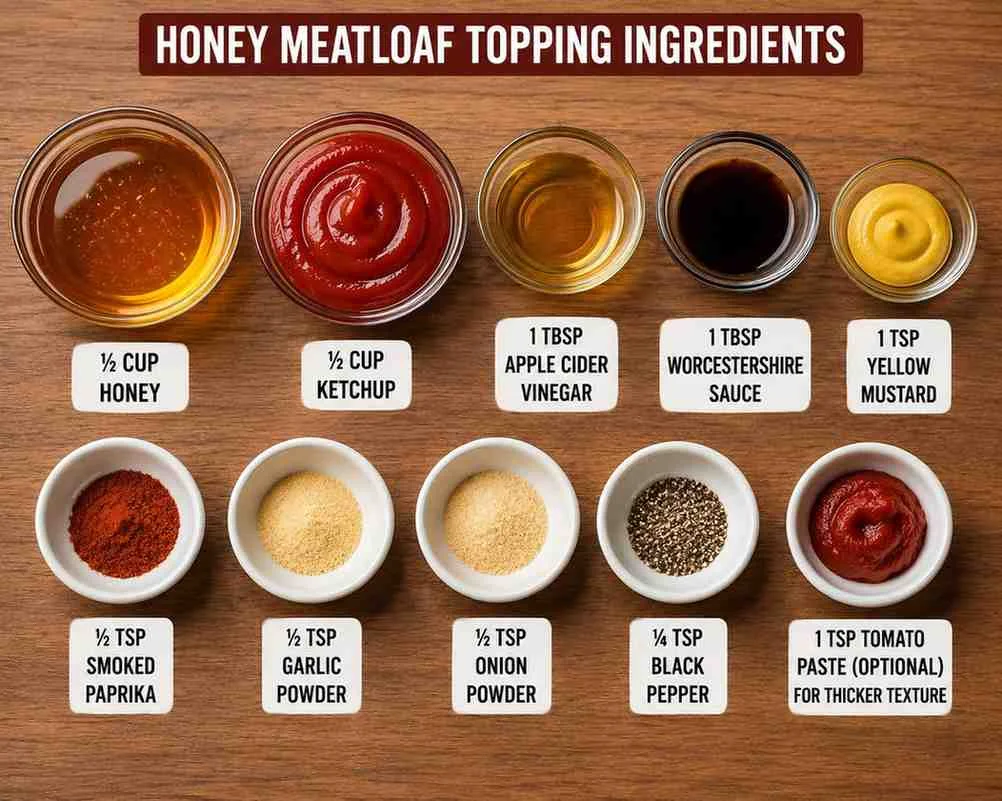
Honey Meatloaf Topping Ingredients
½ cup honey
½ cup ketchup
1 tablespoon apple cider vinegar
1 tablespoon Worcestershire sauce
1 teaspoon yellow mustard
½ teaspoon smoked paprika
½ teaspoon garlic powder
½ teaspoon onion powder
¼ teaspoon black pepper
Optional: 1 teaspoon tomato paste for thicker texture
How to Make Honey Meatloaf Topping
Step 1: Combine the Ingredients
Add the honey, ketchup, apple cider vinegar, Worcestershire sauce, mustard, smoked paprika, garlic powder, onion powder, and black pepper to a small saucepan or mixing bowl. Stir thoroughly until the honey blends evenly into the tomato base.
The ketchup provides structure while the Worcestershire sauce strengthens savory depth and the vinegar balances the sweetness naturally.
Step 2: Simmer the Glaze
Place the saucepan over medium-low heat and simmer for about 5 minutes while stirring occasionally. As the glaze warms, the texture becomes smoother and slightly thicker.
This simmering process helps the honey combine fully with the other ingredients while improving caramelization during baking.
Step 3: Apply to the Meatloaf
Brush a thin layer of glaze over the meatloaf before baking. During the final 15 minutes of cooking, apply another layer for deeper caramelization and shinier texture.
Layering the topping gradually creates better glaze consistency and prevents burning.
Honey Glaze Structure
A balanced honey meatloaf topping is built around four major flavor elements: sweetness, acidity, savory depth, and texture.
Honey acts as the main sweetener while also creating sticky consistency during baking. Ketchup adds body and tomato richness, while Worcestershire sauce contributes savory umami flavor that prevents the glaze from tasting overly sugary.
Apple cider vinegar and mustard balance the sweetness by adding mild acidity and brightness. Smoked paprika, garlic powder, and onion powder deepen the flavor profile and help the topping taste more rounded and savory.
When these ingredients are balanced correctly, the glaze develops smooth glossy texture without becoming too thick, watery, or overpoweringly sweet.
Sticky Texture Science
Honey naturally creates sticky texture because it contains concentrated sugars and lower moisture compared to many liquid sweeteners. During baking, those sugars caramelize as heat reduces moisture from the glaze.
This process creates the glossy coating associated with honey-based meatloaf toppings. Ketchup and tomato paste strengthen the glaze further by improving thickness and helping the topping cling to the surface of the meat.
Applying the glaze in multiple layers also improves stickiness because each layer partially sets before the next one is added.
Honey vs Brown Sugar
Honey and brown sugar both create sweetness and caramelization, but they affect texture differently.
Honey creates smoother glossy coating and softer sweetness. Because it is liquid, it blends evenly into sauces and creates lighter sticky texture.
Brown sugar creates darker caramelization because of its molasses content. It often produces thicker glaze texture and stronger caramel flavor.
Honey glazes generally feel lighter and shinier, while brown sugar glazes recipe create deeper richness and heavier stickiness.
Many homemade meatloaf glazes combine both ingredients together for more balanced flavor and texture.
Sweet Balance Control
Balancing sweetness is one of the most important parts of making honey meatloaf topping. Too much honey can overwhelm the savory flavor of the meat and make the glaze feel heavy.
Acidic ingredients such as vinegar, mustard, and tomato products help balance sweetness while improving overall flavor contrast. Worcestershire sauce adds savory depth that keeps the glaze tasting rich rather than candy like.
Smoked paprika and garlic powder also help create more balanced savory flavor throughout the glaze.
A properly balanced honey topping should taste slightly sweet, lightly tangy, savory, and smooth.
Vinegar Pairing
Apple cider vinegar works especially well in honey meatloaf topping because it adds mild acidity without becoming harsh or overpowering.
The acidity cuts through the sweetness of the honey and balances the richness of the meatloaf itself. Vinegar also slightly loosens the glaze during mixing, which helps it spread more evenly before baking.
Mustard and ketchup strengthen this balance further by adding additional tanginess and tomato depth.
Without enough acidity, honey glaze can become too sweet and lose flavor complexity during baking.
Cooking Tips
Simmer the glaze gently instead of boiling aggressively
Apply glaze during the final baking stage for better caramelization
Use tomato paste if thicker consistency is needed
Add smoked paprika for deeper savory flavor
Brush the glaze in thin layers instead of one heavy coating
Common Mistakes to Avoid
Applying thick honey glaze too early can sometimes cause uneven browning because honey caramelizes quickly under high heat.
Using too much honey without balancing acidity may create overpowering sweetness. Thin glaze consistency can also prevent proper coating and cause the topping to slide during baking.
Layered application and balanced seasoning usually create the best results.
Frequently Asked Questions
What is honey meatloaf topping made of?
Most honey meatloaf toppings combine honey, ketchup, vinegar, Worcestershire sauce, mustard, and savory seasonings.
Why does honey create sticky texture?
Honey contains concentrated sugars that caramelize during baking and create glossy coating.
Is honey better than brown sugar for meatloaf glaze?
Honey creates smoother shine and lighter sweetness, while brown sugar produces darker caramelized richness.
Which vinegar works best with honey glaze?
Apple cider vinegar works especially well because it balances sweetness without overpowering the glaze.
Can honey meatloaf topping work with turkey meatloaf?
Yes. Honey glaze pairs especially well with turkey because it adds moisture perception and stronger flavor balance.
Conclusion
A homemade honey meatloaf topping creates sticky caramelized texture, balanced sweetness, and glossy finish that improves both flavor and appearance. By combining honey with vinegar, Worcestershire sauce, ketchup, and savory seasonings carefully, you can create a glaze that feels rich without becoming overpowering. Once you understand how sweetness, acidity, and caramelization work together, it becomes much easier to customize honey-based toppings into smoky BBQ, spicy, or tangier variations depending on your preferred flavor profile.