
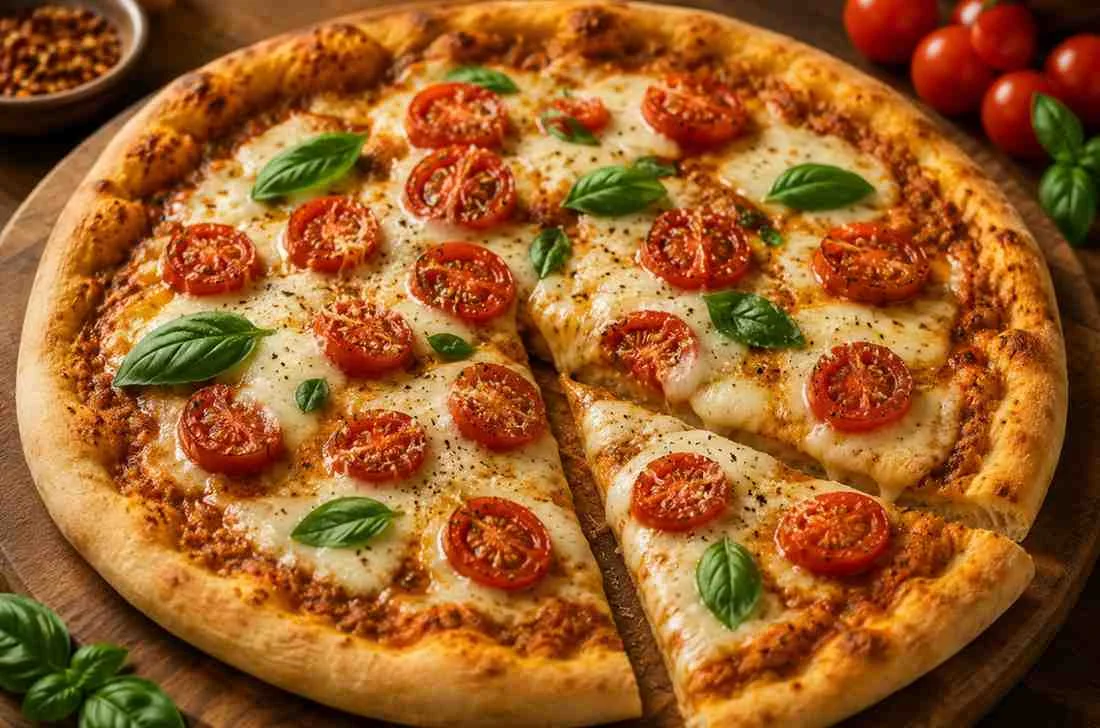
This red pesto pizza recipe is a flavorful alternative to traditional sun dried tomato pesto. Instead of using a plain tomato base, the dough is spread with rich red pesto sauce made with sun-dried tomatoes, herbs, garlic, cheese, and olive oil. Add creamy mozzarella, juicy cherry tomatoes, and fresh basil, then bake until the crust is golden and the cheese is bubbling. The result is a pizza with a concentrated savory flavor and a delicious combination of crisp crust, melted cheese, and fresh toppings. It’s also easy to customize with chicken, mushrooms, roasted vegetables, spicy salami, or other ingredients you already enjoy on pizza.
Recipe Overview
| Recipe Detail | Information |
| Recipe Name | Red Pesto Pizza Recipe |
| Prep Time | 15 minutes |
| Cook Time | 12–15 minutes |
| Total Time | About 30 minutes |
| Yield | 1 large pizza |
| Servings | 2–4 |
| Difficulty | Easy |
| Cuisine | Italian-inspired |
| Method | Oven-baked |
What You’ll Need
For the Pizza
- 1 ball pizza dough, about 1 pound
- ½ cup red pesto
- 1½ cups shredded or torn mozzarella
- ¼ cup grated Parmesan
- 1 cup cherry tomatoes, halved
- 1 tablespoon olive oil
- Fresh basil, for finishing
- Black pepper, to taste
- Optional: red pepper flakes

Why These Ingredients Work
Pizza dough provides the crisp, chewy foundation for the toppings. Homemade dough works well, but good-quality refrigerated or store-bought dough is a practical option when you’re making pizza on a busy day.
Red pesto replaces the traditional tomato sauce and provides concentrated flavor. Because it already contains oil and seasoning, you don’t need a thick layer to make the pizza flavorful.
Mozzarella melts into a soft, stretchy layer and provides a mild creamy contrast to the stronger flavor of the pesto.
Parmesan adds a salty, nutty finish and helps intensify the savory flavor of the pizza.
Cherry tomatoes bring freshness and moisture. Their natural acidity also balances the richness of the pesto and cheese.
Olive oil helps the crust brown and gives the finished pizza a glossy, flavorful finish.
Fresh basil adds a fresh herbal note after baking. Adding it at the end helps preserve its delicate flavor and aroma.
Building the Pizza

Get the Dough Ready
Take the dough out of the refrigerator about 30 minutes before shaping if it has been chilled. Allowing it to warm slightly makes it easier to stretch without pulling back.
Place the dough on a lightly floured surface and gently stretch or roll it into a roughly 12-inch circle. Leave a slightly thicker edge around the perimeter to create a defined crust.
Transfer the dough to a pizza pan, baking sheet, or preheated pizza stone.
Spread the Red Pesto
Spoon the red pesto onto the center of the dough and spread it outward using the back of a spoon.
Leave about ½ inch around the edge without pesto so the crust can brown properly.
You don’t need to cover the dough with a very thick layer. Red pesto has a concentrated flavor, so a moderate coating is usually enough.
Layer the Cheese and Toppings

Scatter the mozzarella evenly over the pesto. Add the halved cherry tomatoes and finish with Parmesan.
Try to distribute the toppings rather than piling them in the center. An even layer allows the crust to cook properly and gives each slice a balanced combination of dough, pesto, cheese, and toppings.
If you’re using red pepper flakes, add a small amount now.
Finish with Olive Oil
Drizzle a little olive oil around the toppings and especially over the exposed edge of the dough.
Avoid adding too much oil because the pesto and cheese already contain fat.
Bake Until the Crust Is Golden

Bake the pizza in a very well-preheated oven at 475°F (245°C) for approximately 12–15 minutes, depending on your oven and the thickness of the dough.
The pizza is ready when the crust is golden brown, the cheese is melted and bubbling, and the underside of the dough is cooked through.
If you’re using a pizza stone or steel, preheat it according to the manufacturer’s instructions before placing the pizza on it.
Add Fresh Basil
Remove the pizza from the oven and let it rest for a minute or two. Scatter fresh basil over the top before slicing.
Finish with a little extra Parmesan or freshly cracked black pepper if desired.
How Much Red Pesto Should You Use?
Red pesto is more concentrated than a basic tomato pizza sauce, so more isn’t necessarily better.
For a 12-inch pizza, around ½ cup gives the dough a generous layer of flavor without overwhelming the crust. If your pesto is particularly oily, you may want to start with slightly less.
Too little pesto can leave the pizza tasting more like a standard cheese pizza, while too much can make the surface oily and prevent the crust from becoming as crisp.
The easiest approach is to spread the pesto in a thin, even layer. You should be able to see the surface of the dough through some areas rather than creating a thick blanket of sauce.
Toppings That Work with Red Pesto

Mozzarella & Tomato
This is one of the simplest combinations. Mild mozzarella balances the concentrated pesto while cherry tomatoes add acidity and freshness.
Chicken & Red Pesto
Cooked chicken turns the pizza into a more substantial meal. Grilled or roasted chicken works especially well because its browned flavor complements the pesto.
Prosciutto & Arugula
Add prosciutto after baking or during the final moments of cooking, then finish with fresh arugula. The salty meat and peppery greens create a strong contrast with the rich pesto.
Roasted Vegetables
Roasted bell peppers, zucchini, eggplant, and onions work particularly well because their caramelized flavors complement the sun-dried tomato notes in red pesto.
Mushrooms & Spinach
Sliced mushrooms add savory depth, while spinach brings a mild green flavor. Cook watery vegetables first when necessary so they don’t release excess moisture onto the crust.

Spicy Salami
Thinly sliced spicy salami adds heat and richness. Because both the salami and pesto are flavorful, use moderate amounts of each to keep the pizza balanced.
How to Keep Red Pesto Pizza From Getting Soggy
A crisp crust starts with controlling moisture.
Don’t Overload the Pesto
A thick layer of pesto adds unnecessary oil and moisture. Spread it evenly instead.
Drain Watery Toppings
Fresh mozzarella and vegetables can release water as they bake. Pat wet ingredients dry before adding them to the pizza, and consider roasting particularly watery vegetables first.
Preheat the Oven Properly
Pizza dough needs strong initial heat to develop a browned exterior. Give the oven plenty of time to reach the target temperature before baking.

Use a Hot Baking Surface
A preheated pizza stone, steel, or heavy baking sheet transfers heat quickly to the bottom of the dough and can help produce a crisper base.
Don’t Overload the Pizza
A mountain of toppings may look appealing before baking, but excessive weight and moisture can make it difficult for the center to cook properly.
Let It Rest Briefly
Allowing the pizza to rest for a minute or two before slicing gives the melted cheese and toppings a chance to settle while the crust remains warm.
Easy Ways to Customize It
Creamy Red Pesto Pizza
Add small pieces of fresh mozzarella or dollops of ricotta before baking. Finish with Parmesan and fresh basil for a richer variation.
Spicy Red Pesto Pizza
Add red pepper flakes, sliced chili, or spicy salami. Keep the amount moderate so the heat doesn’t overwhelm the pesto.

Chicken Red Pesto Pizza
Top the pesto base with thin slices of cooked grilled chicken, mozzarella, and cherry tomatoes. Finish with fresh basil after baking.
Vegetable Red Pesto Pizza
Use roasted peppers, mushrooms, zucchini, and onions for a vegetable-forward version. Roasting the vegetables first helps control their moisture and concentrates their flavor.
What to Serve with Red Pesto Pizza

A simple side can balance the richness of the pizza without competing with the pesto.
Green Salad
A crisp salad with mixed greens, cucumber, and a lemon-based dressing provides freshness and acidity.
Roasted Vegetables
Simple roasted zucchini, peppers, or asparagus make an easy side when you want a more substantial meal.
Antipasto
Olives, roasted peppers, artichokes, and other antipasto ingredients complement the Mediterranean flavors of the pesto.
Tomato Salad
Fresh tomatoes with basil and a light vinaigrette provide a bright contrast to the baked pizza.
Frequently Asked Questions
Can I use red pesto instead of pizza sauce?
Yes. Red pesto can be used directly as the flavorful base for pizza. Because it is concentrated and usually contains oil, spread it in a moderate layer rather than using it as heavily as a traditional tomato sauce.
Does red pesto need to be cooked before using it on pizza?
No. You can spread prepared red pesto directly onto the pizza dough before baking. The oven heats the pesto along with the other toppings.
What cheese goes with red pesto?
Mozzarella is an excellent choice because its mild flavor and melting quality balance the stronger pesto. Parmesan adds a salty, nutty finish, while ricotta can provide a softer creamy element.
Can I use store-bought pizza dough?
Yes. Store-bought dough is a convenient option and works well when you want to make pizza without preparing dough from scratch.
Can I make red pesto pizza without tomato sauce?
Yes. That’s one of the main appeals of this recipe. Red pesto provides the flavorful base, so a separate tomato sauce isn’t necessary.
How do I stop the pizza from becoming oily?
Use a moderate amount of pesto, avoid excessive olive oil, and don’t overload the pizza with oily toppings. If your pesto has separated in its container, stir it thoroughly before measuring.
Can I make the pizza ahead?
You can prepare the toppings and shape the dough ahead of time, but the best crust texture comes from baking the pizza close to serving time. Keep prepared dough refrigerated according to the dough’s storage instructions.
Final Thoughts
This red pesto pizza recipe is an easy way to give homemade pizza a richer, more concentrated flavor without relying on traditional tomato sauce. Red pesto pairs naturally with mozzarella, Parmesan, tomatoes, vegetables, chicken, and a range of savory toppings.
For the best result, use a well-preheated oven, spread the pesto moderately, keep high-moisture toppings under control, and avoid overcrowding the dough. Once you have the basic combination mastered, it’s easy to create your own version with spicy meats, roasted vegetables, chicken, or creamy cheeses.