Seafood boil sauce is the rich, flavorful finishing touch that transforms a simple seafood boil into a memorable meal. While perfectly cooked shrimp, crab, lobster, crawfish, mussels and clams provide the foundation, the sauce brings every ingredient together with layers of butter, garlic, herbs, spices and seasonings. From traditional garlic butter recipes to bold Cajun inspired versions, you can start with this homemade seafood boil sauce recipe before exploring the many regional variations. This guide explores what seafood boil sauce is the most popular types and what makes each variation unique.
What Is Seafood Boil Sauce?
It is a seasoned butter-based sauce prepared separately from the seafood boil and added after cooking to enhance the overall flavor. Instead of being cooked in the boiling liquid, the sauce is poured over the seafood or served on the side as a dipping sauce, allowing every bite to be coated with a rich blend of butter, garlic, herbs, and spices.
Most begin with melted butter and fresh garlic before ingredients such as Cajun seasoning, paprika, onion powder, Worcestershire sauce, lemon juice, black pepper, and fresh herbs are added. Every ingredient contributes to the overall balance, creating a sauce that is rich, savory, aromatic, and slightly tangy. Although recipes vary by region and personal preference, the purpose remains the same: to complement the natural flavor of seafood while creating a smooth coating that brings all the ingredients together.
Different Types of Seafood Boil Sauce
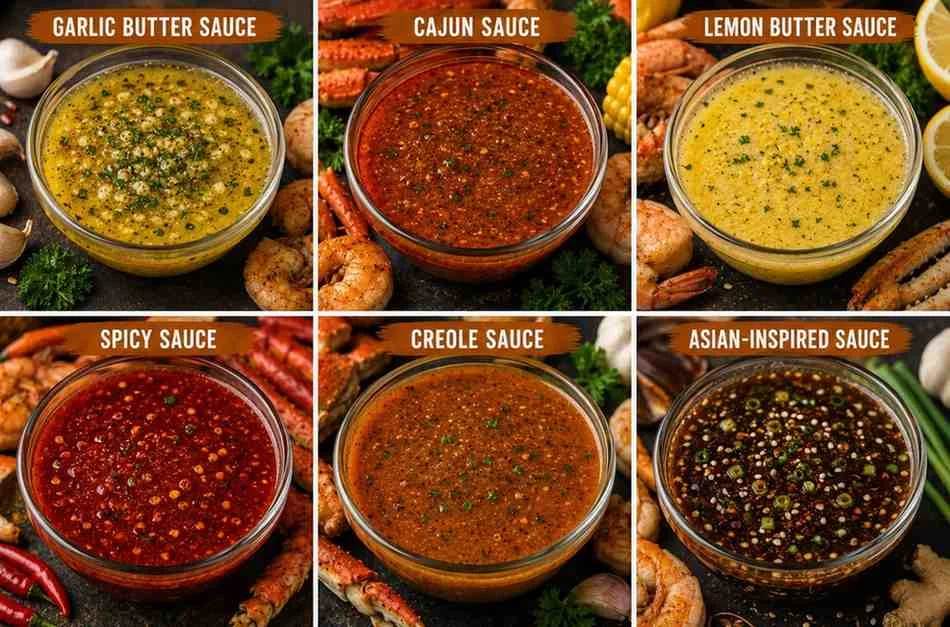
Although it follows the same basic concept, several popular variations have developed over time. Each one offers a different flavor profile while maintaining the buttery richness that defines a classic seafood boil.

1. Garlic Butter Seafood Boil Sauce
Garlic butter seafood boil sauce is considered the classic version and remains one of the most popular choices for homemade seafood boils. Fresh garlic is gently sautéed in butter until fragrant before seasonings such as paprika, onion powder, parsley, black pepper, and lemon juice are added.
The result is a smooth, buttery sauce with a rich garlic aroma that enhances seafood without overpowering its natural sweetness. This style works particularly well with shrimp, lobster tails, king crab legs, scallops, and mussels because it complements their delicate flavor.
Its simple ingredient list also makes it one of the easiest seafood boil sauces to prepare, making it a favorite among home cooks. If you’d like step-by-step instructions, try our garlic butter seafood boil sauce for a rich, buttery recipe that’s perfect for shrimp, crab, lobster, and crawfish.
2. Cajun Seafood Boil Sauce
Cajun seafood boil sauce delivers a bolder, more robust flavor inspired by Louisiana cooking traditions. Along with butter and garlic, this variation includes Cajun seasoning, smoked paprika, cayenne pepper, onion powder, garlic powder, oregano, thyme, Worcestershire sauce, and lemon juice.
Unlike garlic butter sauce, Cajun seafood boil sauce emphasizes layers of seasoning that coat every ingredient in the seafood boil. The result is a rich sauce with balanced spice and deep savory flavor that pairs beautifully with shrimp, crawfish, crab legs, smoked sausage, potatoes, and corn on the cob.
Many seafood restaurants serve Cajun seafood boil sauce because it creates the signature flavor associated with Southern seafood boils while remaining versatile enough to complement a wide variety of seafood.

3. Lemon Butter Seafood Boil Sauce
Lemon butter seafood boil sauce offers a lighter alternative while maintaining the creamy richness expected from seafood boil sauces. Butter remains the foundation, while fresh lemon juice, lemon zest, garlic, parsley, and cracked black pepper create a brighter flavor profile.
The citrus balances the richness of the butter and highlights the natural sweetness of seafood instead of covering it with heavy seasoning. This version is especially popular with lobster tails, scallops, shrimp, and white fish because its fresh flavor allows the seafood itself to remain the star of the meal.
Many cooks choose lemon butter sauce for smaller seafood dinners or summer gatherings where lighter flavors are preferred.
4. Spicy Seafood Boil Sauce
Spicy seafood boil sauce builds on the Cajun version by increasing the level of heat while preserving the buttery base. Fresh jalapeños, cayenne pepper, crushed red pepper flakes, hot sauce, chipotle powder, or additional Cajun seasoning create multiple layers of spice without overpowering the garlic and butter.
A well-balanced spicy seafood boil sauce should provide warmth while allowing the richness of the butter and the sweetness of the seafood to remain noticeable. When prepared carefully, the heat complements the seafood instead of dominating it.
This variation pairs especially well with crawfish, shrimp, crab legs, mussels, smoked sausage, and roasted corn because these ingredients stand up well to stronger seasoning. You can check out homemade spicy seafood boil sauce recipe.

5. Creole Seafood Boil Sauce
Creole seafood boil sauce shares similarities with Cajun sauce but often incorporates additional herbs and a more layered seasoning profile. Butter, garlic, paprika, thyme, oregano, Worcestershire sauce, onion, parsley, lemon juice, and black pepper combine to create a rich sauce with noticeable herbal character.
Compared with Cajun seafood boil sauce, Creole versions generally offer more herb-forward flavor while maintaining moderate spice. The result is a well-rounded sauce that complements mixed seafood boils containing shrimp, crab, lobster, mussels, and clams.
Because of its balanced seasoning, Creole seafood boil sauce is often chosen when serving a variety of seafood in the same meal.
6. Asian-Inspired Seafood Boil Sauce
Modern seafood restaurants have introduced seafood boil sauces that combine traditional butter with ingredients inspired by Asian cuisine. Soy sauce, garlic, ginger, sesame oil, chili paste, green onions, and butter create a unique balance of richness and savory depth.
The buttery base remains familiar, while soy sauce and ginger introduce bold umami flavors that pair beautifully with shrimp, crab, lobster, mussels, and scallops. Some variations also include honey or brown sugar to balance the savory ingredients and create a smooth finish.
Although this style differs from traditional Southern seafood boil sauces, it has become increasingly popular because it offers a fresh twist while preserving the rich texture expected from seafood boil sauce.
Origin and History of Seafood Boil Sauce
The story of seafood boil sauce is closely connected to the seafood boil tradition that developed along the Gulf Coast of the United States. Coastal communities in Louisiana, Mississippi, Alabama, and parts of Texas gathered fresh shrimp, crawfish, crab, and other shellfish before cooking them together in large pots with corn, potatoes, sausage, and aromatic seasonings. These communal meals celebrated local seafood and brought families and neighbors together around a single table.
In the early days, seafood was primarily flavored by the seasoned boiling liquid. Over time, cooks began preparing a separate butter-based sauce to pour over the seafood after cooking. This finishing sauce added a richer texture and allowed the garlic, herbs, spices, and butter to coat every ingredient evenly. The result was a more flavorful seafood boil where each bite carried the same balanced seasoning.
As seafood restaurants became more popular, chefs developed signature seafood boil sauces by adjusting spice blends, herbs, garlic, and citrus. Garlic butter seafood boil sauce became known for its smooth richness, while Cajun seafood boil sauce gained popularity for its bold seasoning and deeper flavor. Modern recipes continue to build on these traditions, introducing new ingredients while preserving the buttery character that defines classic seafood boil sauce.
Today, seafood boil sauce is enjoyed far beyond the Gulf Coast. Home cooks and restaurants around the world prepare their own versions using traditional techniques while adapting the seasoning to suit different tastes. Despite these variations, the goal remains the same: creating a rich sauce that enhances seafood without overpowering its natural flavor.

Traditional Ingredients in Seafood Boil Sauce
Although recipes differ from one kitchen to another, most traditional seafood boil sauces rely on a handful of core ingredients that work together to create their distinctive flavor.
Butter
Butter forms the foundation of nearly every seafood boil sauce. It creates the rich, silky texture that allows the seasonings to coat shrimp, crab, lobster, crawfish, and vegetables evenly. Unsalted butter is often preferred because it gives cooks greater control over the final seasoning.
Fresh Garlic
Garlic is one of the defining ingredients of seafood boil sauce. Fresh minced garlic develops a deep aroma when gently cooked in butter, creating a savory base that complements nearly every type of seafood.
Cajun Seasoning
Many traditional recipes include Cajun seasoning, which combines paprika, garlic powder, onion powder, black pepper, cayenne pepper, oregano, and thyme. This seasoning blend contributes warmth, depth, and the signature Southern flavor associated with seafood boils.

Paprika
Paprika adds both color and mild sweetness to the sauce. Smoked paprika creates a deeper, more robust flavor, while sweet paprika contributes gentle warmth without additional heat.
Onion Powder
Onion powder enhances the savory flavor without changing the smooth consistency of the sauce. It blends easily with butter and complements the garlic.
Worcestershire Sauce
A small amount of Worcestershire sauce adds rich umami flavor and balances the buttery base. Because it contains several savory ingredients, it contributes noticeable depth without becoming the dominant flavor.
Lemon Juice
Fresh lemon juice brightens the sauce and balances the richness of the butter. The acidity helps create a cleaner finish while enhancing the natural sweetness of seafood.
Black Pepper
Freshly ground black pepper provides gentle warmth and complements both the garlic and Cajun seasoning.

Fresh Herbs
Parsley is commonly added near the end of cooking for freshness and color. Some recipes also include thyme or oregano to create additional layers of flavor.
Together, these ingredients create the balanced combination of richness, garlic, herbs, citrus, and seasoning that has made seafood boil sauce a favorite for generations.
Cajun vs. Garlic Butter Seafood Boil Sauce
Garlic butter seafood boil sauce and Cajun seafood boil sauce are the two most recognizable styles, but they offer noticeably different flavor experiences.
Garlic Butter Seafood Boil Sauce
Garlic butter seafood boil sauce focuses on simplicity. Butter and fresh garlic form the foundation, while lemon juice, parsley, paprika, and black pepper provide balance without overwhelming the seafood.
Because the seasoning remains relatively mild, this sauce allows the natural sweetness of shrimp, lobster, scallops, crab, and mussels to remain the center of attention. It produces a smooth, creamy coating that enhances seafood rather than masking its flavor.
Garlic butter sauce is often preferred when serving premium seafood because it complements delicate flavors while adding richness and aroma.

Cajun Seafood Boil Sauce
Cajun seafood boil sauce is much bolder. Along with butter and garlic, it includes Cajun seasoning, smoked paprika, cayenne pepper, onion powder, garlic powder, oregano, thyme, Worcestershire sauce, and lemon juice.
These additional spices create a deeper, more robust flavor profile that coats every ingredient with layers of seasoning. Instead of highlighting only the seafood, Cajun sauce also enhances potatoes, corn, sausage, and vegetables served alongside the seafood boil.
Many seafood restaurants prefer Cajun seafood boil sauce because it produces the signature flavor most diners expect from Southern-style seafood boils.
Which Sauce Is Better?
Neither sauce is universally better because each serves a different purpose.
Garlic butter seafood boil sauce is an excellent choice when you want a rich, buttery finish that complements delicate seafood flavors. Cajun seafood boil sauce is ideal when you’re looking for a more seasoned, restaurant-style experience with greater depth and complexity.
Many experienced cooks prepare both sauces for the same seafood boil, allowing everyone to choose the flavor profile they enjoy most.
Best Seafood Pairings for Seafood Boil Sauce
One of the reasons seafood boil sauce remains so popular is its versatility. The rich butter base, aromatic garlic, herbs, and seasonings complement a wide variety of seafood while also enhancing vegetables and other ingredients commonly served in a seafood boil. Choosing the right pairing helps create a balanced meal where both the seafood and the sauce shine.
Shrimp
Shrimp is one of the most popular choices for seafood boil sauce because its naturally sweet flavor absorbs butter and seasonings exceptionally well. Garlic butter seafood boil sauce creates a rich coating, while Cajun seafood boil sauce adds bold flavor without overpowering the shrimp try our buttery shrimp boil sauce recipe for a perfectly balanced buttery garlic sauce.
Crab Legs
Snow crab and king crab legs pair beautifully with seafood boil sauce. The buttery sauce clings to the crab meat, adding layers of garlic, herbs, and spices while complementing the delicate sweetness of the crab. You can explore our seafood boil sauce for crab for a rich, buttery recipe that’s perfect for crab boils.
Lobster Tails
Lobster tails are often served with garlic butter seafood boil sauce because the simple combination of butter, garlic, and lemon enhances the lobster’s rich texture. Cajun sauce also works well for those who prefer a more robust flavor. Check out recipe for lobster boil sauce by sauce vista.
Crawfish
Crawfish are traditionally associated with Cajun seafood boils. Their firm texture and slightly sweet flavor stand up well to bold seasonings, making Cajun seafood boil sauce one of the most popular choices.
Mussels
Mussels absorb flavorful sauces remarkably well. Garlic butter, lemon butter, and Creole-style seafood boil sauces all complement their tender texture while adding extra richness.
Clams
Clams develop excellent flavor when coated in seafood boil sauce immediately after cooking. Their mild taste pairs especially well with garlic butter and lemon butter variations.
Scallops
Scallops have a naturally delicate sweetness that works beautifully with lighter seafood boil sauces. Garlic butter and lemon butter sauces enhance their flavor while allowing the scallops to remain the highlight of the dish.
Corn on the Cob
Corn is a classic seafood boil ingredient because it absorbs the butter and spices exceptionally well. Every bite combines natural sweetness with rich garlic and seasoning.
Potatoes
Baby potatoes develop a creamy texture after boiling and become even more flavorful when coated in seafood boil sauce. They absorb the butter and spices, making them one of the most satisfying parts of a seafood boil.
Smoked Sausage
Many seafood boils include smoked sausage because its savory flavor pairs naturally with buttery seafood boil sauce. The rich seasoning complements both garlic butter and Cajun versions.
Flavor Profile of Seafood Boil Sauce
The flavor of seafood boil sauce comes from balancing several ingredients rather than allowing one ingredient to dominate the recipe.
Rich and Buttery
Butter forms the foundation of the sauce, creating a silky texture that coats seafood evenly while carrying the flavors of the herbs and spices.
Savory Garlic
Fresh garlic contributes one of the most recognizable flavors in seafood boil sauce. When gently cooked in butter, it develops a rich aroma that enhances every ingredient in the seafood boil.
Bold Seasoning
Paprika, Cajun seasoning, black pepper, onion powder, thyme, oregano, and Worcestershire sauce work together to create layers of savory flavor. Depending on the recipe, the seasoning may range from mild to boldly spiced.
Bright Citrus
Fresh lemon juice balances the richness of the butter by adding clean acidity. This brightness helps create a more balanced sauce without masking the seafood.
Herbaceous Finish
Fresh parsley and other herbs provide freshness that complements the buttery base while adding color to the finished seafood boil.
The best seafood boil sauces achieve harmony between these elements. No single ingredient should overpower the others. Instead, every component contributes to a smooth, rich, and well-balanced flavor that complements seafood naturally.
Frequently Asked Questions
What is the most popular seafood boil sauce?
Garlic butter seafood sauce and Cajun seafood sauce are the two most popular varieties. Garlic butter offers a rich, buttery flavor with fresh garlic and lemon, while Cajun seafood boil sauce includes additional herbs and spices for a bolder, restaurant-style taste.
What seafood pairs best with seafood boil sauce?
It pairs exceptionally well with shrimp, crab legs, lobster tails, crawfish, mussels, clams, and scallops. It also complements traditional seafood boil sides such as corn on the cob, baby potatoes, and smoked sausage.
Conclusion
This is more than just a finishing sauce it’s the element that brings an entire seafood boil together. From classic garlic butter recipes to bold Cajun and Creole variations, every style offers its own unique balance of butter, garlic, herbs, spices, and citrus. Understanding the different types, traditional ingredients, and ideal seafood pairings makes it easier to choose the right sauce for every occasion. Whether you’re preparing shrimp, crab, lobster, crawfish, or a complete seafood feast, a well-made seafood boil sauce adds the rich flavor and smooth coating that turns a good meal into a memorable one.