Middle Eastern cuisine is renowned for its rich, vibrant flavors, and no shawarma experience is complete without its signature sauces. While many are familiar with garlic-based sauces like toum, regional traditions also feature tarator and shatta sauces, which bring unique textures, flavors, and heat to shawarma. These sauces not only enhance taste but also carry cultural significance, connecting modern dishes to centuries-old culinary traditions.
What Are Traditional Middle Eastern Sauces for Shawarma?
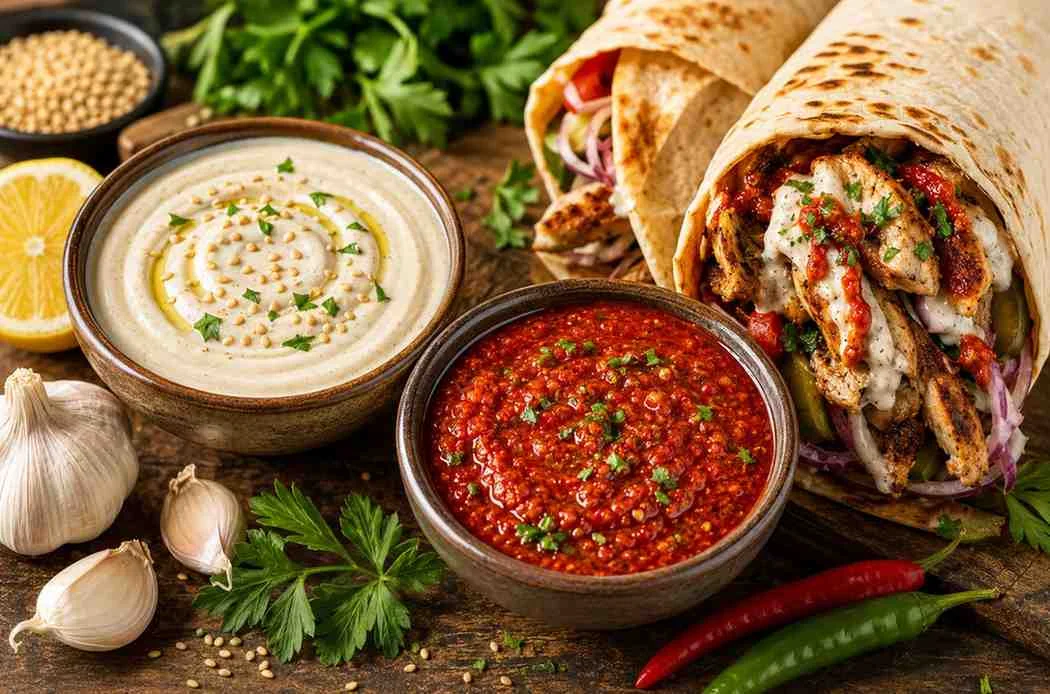
Traditional Middle Eastern sauces for shawarma are condiments designed to complement grilled or roasted meats, fried vegetables, and fresh breads. Unlike commercial sauces, they are crafted with simple, high-quality ingredients, emphasizing natural flavors. Tarator, a sesame-based sauce, provides nutty creaminess and subtle acidity, while shatta, a chili-based sauce, delivers vibrant heat and tanginess. These sauces are foundational in Lebanese shawarma condiment , Syrian, and Palestinian shawarma preparations and have been passed down through generations.
Why Traditional Shawarma Sauces Matter
Using authentic sauces enhances flavor balance, adds moisture, and elevates the eating experience. Proper sauces complement shawarma marinades, preventing the dish from tasting overly heavy or one-dimensional. Traditional sauces also preserve culinary heritage, connecting the diner to Middle Eastern culture. Chefs and home cooks alike recognize that a shawarma without its appropriate sauce lacks the nuanced combination of creamy, tangy, spicy, and aromatic notes that define the dish.
Tarator Sauce for Shawarma
Tarator is a classic sesame-based sauce frequently used in Middle Eastern cuisine. Its creamy texture and mild tang make it versatile for both meats and vegetarian dishes.
Ingredients
1: Tahini
2: Lemon juice
3: Garlic
4: Water
5: Salt

What Tarator Tastes Like
→ Creamy, nutty, slightly tangy
Tarator delivers a smooth, mellow flavor with a subtle bite from the garlic and a light acidity from the lemon. The sesame paste gives body and richness without overpowering the main protein.
Cultural Significance of Tarator
In Middle Eastern kitchens, tarator has been a staple for centuries. Often served with falafel, grilled vegetables, and fish, it represents the region’s emphasis on balancing earthy ingredients with fresh citrus. Tarator is especially popular in Palestinian and Syrian cuisine, where it accompanies street food and home-cooked meals alike.
Traditional Preparation of Tarator
To prepare authentic tarator, whisk together tahini and lemon juice until smooth. Gradually add minced garlic and water while continuously stirring. Salt is incorporated to enhance flavors. The sauce should be thick enough to coat a spoon yet pourable, allowing it to drape over shawarma wraps and grilled meats beautifully.
Why Tarator Works So Well
The creaminess of tahini contrasts with the spices of shawarma meat, while the acidity from lemon juice brightens the overall dish. Tarator also adds moisture, preventing the wrap or plate from being dry. Its neutral nutty flavor allows it to pair with both mild chicken and intensely seasoned beef or lamb.
Shatta Sauce: The Spicy Shawarma Companion
Shatta is a chili-based sauce commonly used in Middle Eastern cuisine to add heat and vibrancy to dishes. It is particularly popular in Syrian, Palestinian, and Lebanese street food.
Ingredients
1: Fresh red or green chilies
2: Olive oil
3: Salt
4: Vinegar or lemon juice
What Shatta Tastes Like
→ Spicy, tangy, aromatic
Shatta’s heat ranges from mild to fiery, depending on the type of chili used. The addition of olive oil smooths the intensity, and vinegar or lemon juice provides a sharp counterbalance to the richness of meats.
Traditional Preparation of Shatta
Finely chop fresh chilies and blend them with salt, olive oil, and vinegar or lemon juice until smooth. Some variations include garlic, roasted peppers, or herbs. The key is balancing heat, acidity, and texture, creating a sauce that complements rather than overwhelms shawarma.
Why Shatta Works With Shawarma
Shatta cuts through the fat and richness of the meat while adding complexity. It enhances the marinade flavors without masking them, providing layers of taste that make each bite dynamic. The sauce also offers visual appeal, with vibrant red or green streaks contrasting the golden shawarma.
Regional Variations
Syrian Shawarma Sauces
Syrian shawarma often features tarator and shatta in combination. Syrian street vendors use these sauces to complement chicken, beef, and lamb shawarma. The tarator adds creaminess, while shatta provides a heat element that elevates the flavor profile. Garlic is occasionally added, but the focus remains on herbs and spices balanced with tanginess.
Palestinian Shawarma Sauces
In Palestine, tarator remains the dominant traditional sauce, with shatta used more selectively. The Palestinian version often includes extra lemon juice or pickled elements to intensify brightness. Local olive oils and chili varieties influence both flavor and heat level. These sauces are deeply intertwined with street food culture, providing an authentic taste experience.
Best Sauce Pairings for Shawarma
Choosing the right sauce can dramatically enhance the shawarma experience:
1: Chicken Shawarma – Balanced combination of tarator and mild shatta.
2: Beef Shawarma – Tarator provides richness, shatta adds heat.
3: Lamb Shawarma – Heavier use of shatta to complement rich meat.
4: Falafel Wraps – Tarator for creaminess, occasional mild shatta for subtle spice.
5: Grilled Vegetables – Tarator enhances nuttiness, shatta adds zing.
6: Rice Bowls – Both sauces can be drizzled for contrast and moisture.
Testing different combinations shows that using both sauces together or separately allows for customization according to spice tolerance and flavor preference.
Why Traditional Sauces Continue to Matter
Traditional Middle Eastern sauces for shawarma are essential because they:
- Preserve cultural authenticity
- Provide balanced flavor and texture
- Enhance aroma and visual appeal
- Complement diverse proteins and vegetables
- Offer flexibility for variations and meal customization
Even with modern fusion wraps and international versions, the classic combinations of tarator and shatta remain the standard for quality and authenticity.
Expert Tips for Authentic Shawarma Sauces
- Use Fresh Ingredients: Fresh herbs, chilies, and citrus juice produce more vibrant flavors.
- Emulsify Gradually: Add liquids slowly to achieve creamy, stable textures.
- Balance Flavors: Adjust salt, acidity, and heat to suit your shawarma protein.
- Blend Consistently: Use a blender or food processor for smooth sauces; mortar and pestle works for traditional texture.
- Rest Before Serving: Allow flavors to meld for at least 20–30 minutes.
FAQs
Can I make tarator and shatta ahead of time?
Yes. Store in airtight containers in the refrigerator. Tarator lasts 5–7 days, shatta can last up to 2 weeks depending on oil and acidity.
Are these sauces suitable for all shawarma types?
Absolutely. They pair well with chicken, beef, lamb, falafel, and vegetarian shawarma bowls.
Conclusion
Traditional Middle Eastern sauces such as tarator and shatta are essential components of authentic shawarma. These sauces bring creaminess, nutty depth, and spicy brightness that enhance the flavors of grilled meats, vegetables, and breads. Understanding their preparation, cultural significance, and pairing options allows home cooks and enthusiasts to recreate the true taste of Middle Eastern shawarma at home. With simple ingredients and careful attention to balance, these sauces elevate everyday shawarma into a full sensory experience, making every bite flavorful, aromatic, and authentic.