A restaurant style burger sauce recipe is one of the easiest ways to recreate the rich, creamy, and perfectly balanced flavor found in your favorite burger restaurants. Unlike basic burger sauces, a true restaurant-style version focuses on balancing creaminess, tanginess, sweetness, and savory depth so every bite complements the burger instead of overpowering it. Whether you’re making classic cheeseburgers, smash burgers, grilled burgers, or chicken burgers, this homemade restaurant style burger sauce recipe delivers origional taste.
Restaurant Style Burger Sauce Recipe
This restaurant style burger sauce recipe is creamy, rich, and ready in just a few minutes.
Preparation Time: 5 minutes
Cooking Time: 0 minutes
Total Time: 5 minutes
Yield: 1 cup
Ingredients
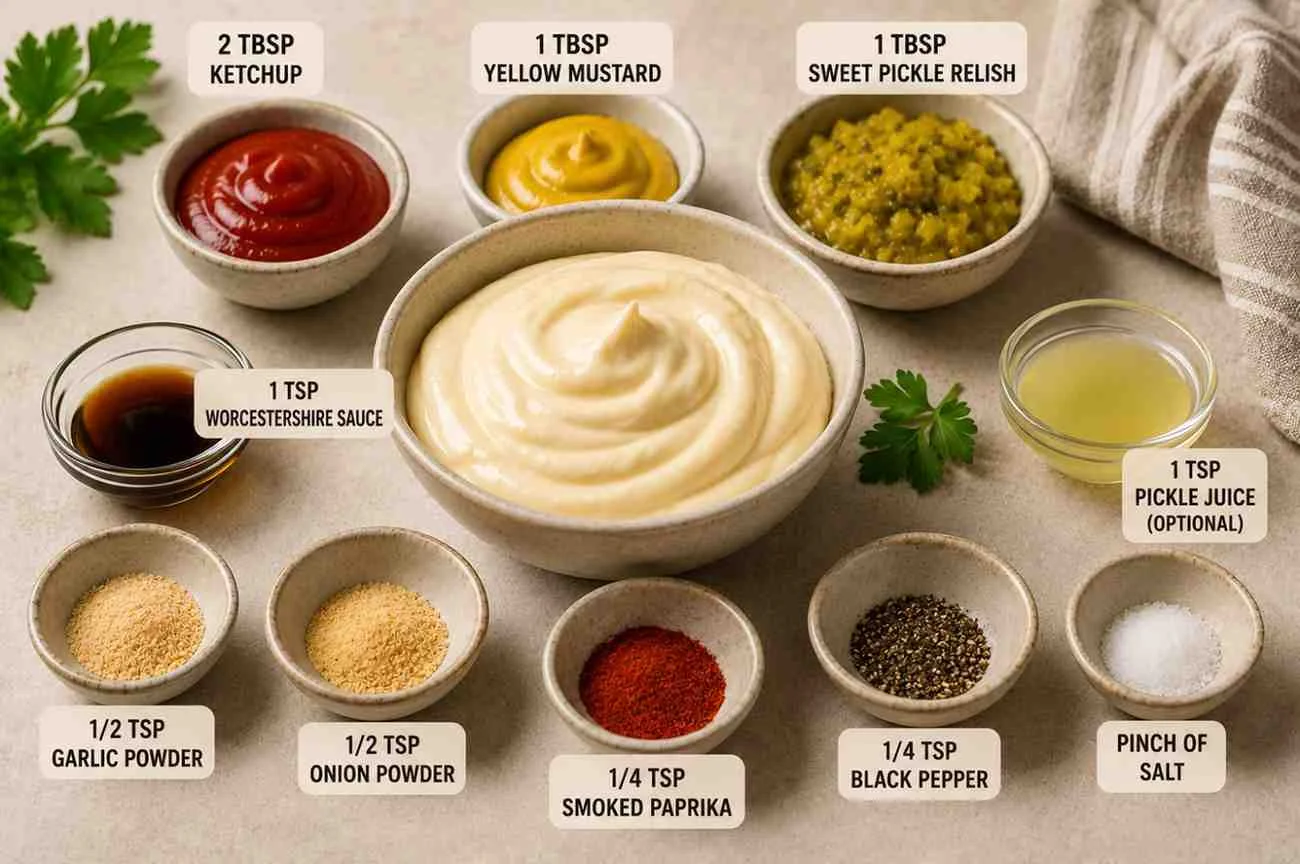
1: ½ cup mayonnaise
2: 2 tablespoons ketchup
3: 1 tablespoon yellow mustard
4: 1 tablespoon sweet pickle relish
5: 1 teaspoon Worcestershire sauce
6: ½ teaspoon garlic powder
7: ½ teaspoon onion powder
8: ¼ teaspoon smoked paprika
9: ¼ teaspoon black pepper
10: Pinch of salt
11: 1 teaspoon pickle juice (optional)

How to Make Restaurant Style Burger Sauce
Step 1: Combine the Base
Add the mayonnaise, ketchup, yellow mustard, and pickle relish to a medium mixing bowl.
Step 2: Add the Seasonings
Mix in the Worcestershire sauce, garlic powder, onion powder, smoked paprika, black pepper, salt, and pickle juice if using.
Step 3: Whisk Until Smooth
Whisk until the ingredients become smooth, creamy, and evenly combined.
The finished restaurant style burger sauce should have a light orange color with a rich, creamy consistency.
Step 4: Taste and Adjust
Taste the sauce before chilling.
If desired, add a little extra mustard for tanginess, ketchup for sweetness, or pickle juice for brightness.
Step 5: Refrigerate Before Serving
Cover and refrigerate for at least 30 minutes before serving.
During recipe testing, allowing the sauce to rest consistently produced a smoother and more balanced flavor because the seasonings blended together more completely.
What Makes Restaurant Style Burger Sauce Different?
Many homemade burger sauces contain similar ingredients, but restaurant-style versions focus on balance instead of quantity.
Professional burger restaurants rarely rely on one dominant flavor. Instead, every ingredient serves a purpose. Mayonnaise provides richness, ketchup adds mild sweetness, mustard contributes acidity, pickle relish introduces brightness, and Worcestershire sauce supplies savory depth.
Another difference is consistency. Restaurant sauces are usually thick enough to stay inside the burger without dripping while remaining smooth enough to spread easily across both halves of the bun.
Many restaurants also prepare their sauces several hours before service. This resting time allows the ingredients to blend together, creating the familiar flavor people associate with restaurant burgers.
Why These Ingredients Work
Every ingredient contributes to the overall balance of the sauce.
Mayonnaise
Creates the creamy foundation and rich mouthfeel.
Ketchup
Adds tomato flavor along with gentle sweetness.
Yellow Mustard
Provides acidity that cuts through the richness of the mayonnaise.
Sweet Pickle Relish
Adds texture, brightness, and subtle sweetness.
Worcestershire Sauce
Introduces savory umami flavor that makes the sauce taste more complex.
Garlic Powder
Adds depth without overpowering the burger.
Onion Powder
Complements the garlic while enhancing the savory profile.
Smoked Paprika
Contributes mild smokiness and attractive color.
Together, these ingredients create the signature flavor found in many restaurant-style burger sauces.
Flavor Balance Explained
One reason restaurant burger sauces taste so satisfying is because every major flavor element is balanced.
Creaminess comes from the mayonnaise, while ketchup provides sweetness without becoming sugary. Mustard adds brightness, pickle relish introduces acidity and texture, and Worcestershire sauce contributes savory richness.
During repeated recipe testing, sauces with balanced acidity consistently paired better with burgers than sauces that focused too heavily on sweetness or spice.
The goal is not to make every ingredient noticeable. Instead, the finished sauce should taste unified and complement the burger naturally.
Restaurant Techniques for Better Burger Sauce
Professional kitchens often follow simple practices that improve consistency.
Using high-quality mayonnaise creates a richer texture from the start. Ingredients are measured carefully to maintain consistency between batches, and seasonings are added gradually rather than all at once.
Restaurants also prepare burger sauce ahead of time whenever possible. Resting the sauce in the refrigerator allows the garlic, mustard, relish, and Worcestershire sauce to blend together into a smoother overall flavor.
Another common technique is tasting every batch before service and making small adjustments if needed instead of changing the recipe dramatically.
Homemade vs Restaurant Style Burger Sauce
Homemade burger sauce offers flexibility that restaurant versions often cannot.
You can adjust sweetness, tanginess, garlic, or spice levels to suit your own preferences. Fresh ingredients also provide brighter flavor because they have not been sitting on a shelf for extended periods.
Restaurant sauces, however, are designed for consistency. Every burger should taste the same regardless of when it is ordered.
For home cooks, combining restaurant techniques with fresh ingredients often produces the best results.
Best Burgers for Restaurant Style Burger Sauce
This versatile sauce pairs with a wide variety of burgers.
Classic Cheeseburgers
The creamy texture complements melted cheese beautifully.
Smash Burgers
Balances the crispy crust without overpowering the beef.
Bacon Burgers
Adds richness while balancing smoky bacon.
Chicken Burgers
Provides creaminess that works well with grilled or crispy chicken.
Turkey Burgers
Helps add moisture to lean turkey patties.
Veggie Burgers
Creates richness that complements vegetable-based patties.
Double Burgers
The thicker texture stays between multiple burger layers.
Flavor Variations
Restaurant style burger sauce is easy to customize.
Garlic Restaurant Burger Sauce
Increase garlic powder or add freshly grated garlic for a stronger savory flavor.
Spicy Restaurant Burger Sauce
Mix in sriracha, cayenne pepper, or your favorite hot sauce.
BBQ Restaurant Burger Sauce
Replace part of the ketchup with barbecue sauce for a smoky variation.
Chipotle Restaurant Burger Sauce
Blend in chipotle peppers or chipotle powder for smoky heat.
Mustard-Forward Version
Increase yellow mustard or Dijon mustard for a tangier finish.
Small adjustments allow you to create unique sauces while maintaining the restaurant-style foundation.
Common Mistakes to Avoid
Several burger sauce mistakes can affect the final sauce.
1: Using too much ketchup often makes the sauce overly sweet.
2: Adding excessive mustard can overpower the other ingredients.
3: Skipping the refrigeration step prevents the flavors from fully developing.
4: Using low-quality mayonnaise reduces the richness of the finished sauce.
5: Adding too many spices at once can create an unbalanced flavor profile.
Making gradual adjustments after tasting almost always produces better results than making large changes.
Storage Tips
Transfer the prepared restaurant style burger sauce into a clean airtight container immediately after mixing.
Store it in the refrigerator until ready to use.
The flavor usually improves after several hours because the ingredients continue blending together.
Before serving, stir gently if slight separation occurs.
Using clean utensils each time helps maintain freshness and preserves the quality of the sauce.
Best Ways to Use Restaurant Style Burger Sauce
Restaurant style burger sauce is far more versatile than many people realize.
Spread it on classic hamburgers and cheeseburgers for a traditional burger experience.
Use it on smash burgers to balance the crispy edges and rich beef flavor.
Serve it with grilled chicken burgers, turkey burgers, or veggie burgers for added moisture and flavor.
It also works as a dipping sauce for French fries, onion rings, potato wedges, chicken tenders, and fried pickles.
Many people also enjoy using restaurant style burger sauce as a sandwich spread or wrap sauce because of its creamy texture and balanced flavor.
FAQs
What makes restaurant style burger sauce different?
Restaurant style burger sauce focuses on balancing creaminess, sweetness, tanginess, and savory flavor while maintaining a thick, spreadable consistency.
Can I make restaurant style burger sauce ahead of time?
Yes. Preparing the sauce several hours in advance often improves the flavor because the ingredients have time to blend together.
Is restaurant style burger sauce the same as secret sauce?
Many restaurant secret sauces use a similar base of mayonnaise, ketchup, mustard, and seasonings, but every restaurant has its own unique ingredient ratios and signature additions.
Can I use restaurant style burger sauce on chicken burgers?
Absolutely. Its creamy texture and balanced flavor pair exceptionally well with grilled and crispy chicken burgers.
Conclusion
A homemade restaurant style burger sauce recipe makes it easy to recreate the creamy, balanced flavor found in your favorite burger restaurants. By combining simple pantry ingredients with proper mixing techniques and allowing the sauce to rest before serving, you can achieve a rich, flavorful condiment that complements everything from classic cheeseburgers and smash burgers to chicken and turkey burgers. Once you master this restaurant style burger sauce recipe, it is likely to become your go-to sauce for burgers, sandwiches, and dipping alike.