
Red pesto spinach pasta is a quick, flavorful meal that brings together tender pasta, savory red pesto, fresh spinach, garlic, and Parmesan. The red pesto gives the dish a concentrated tomato and herb flavor, while spinach adds freshness and color without requiring a separate vegetable side. If you want to explore more ways to use this versatile sauce with pasta, see our red pesto pasta sauce guide.
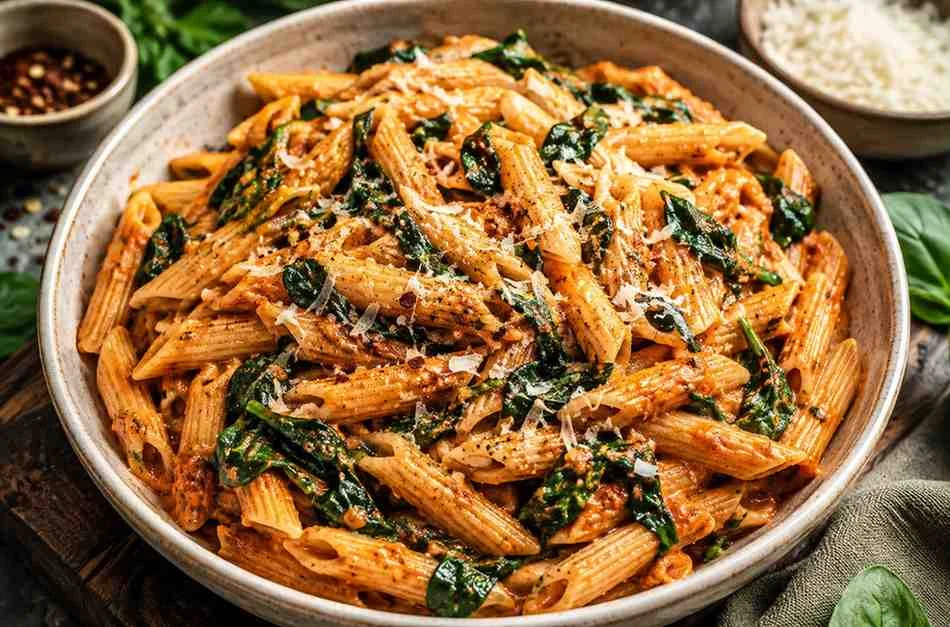
Recipe Overview
| Detail | Information |
| Prep Time | 10 minutes |
| Cook Time | 15 minutes |
| Total Time | 25 minutes |
| Servings | 4 |
| Difficulty | Easy |
| Cuisine | Italian-inspired |
| Course | Main Course |
Ingredients for Red Pesto Spinach Pasta
| Ingredient | Amount |
| Pasta | 12 ounces |
| Red pesto | ¾ cup |
| Fresh spinach | 4 cups |
| Parmesan cheese | ½ cup, grated |
| Garlic | 2 cloves, minced |
| Olive oil | 1 tablespoon |
| Reserved pasta water | ½–1 cup |
| Black pepper | To taste |

Optional Additions
- Cherry tomatoes
- Cooked chicken
- Fresh mozzarella
- Red pepper flakes
- Toasted pine nuts
- Fresh basil
- Lemon juice or zest
Pick the Right Pasta
The pasta shape can make a noticeable difference because red pesto needs somewhere to cling.
Penne is a dependable choice because the sauce can coat both the outside and inside of the tubes.
Fusilli works particularly well when you want the pesto caught between the pasta spirals.
Rigatoni creates a more substantial bite and works nicely with additions such as chicken or roasted vegetables.
Farfalle gives the dish a lighter appearance and is useful when you’re adding several vegetables.
Spaghetti can also be used, although the pesto tends to coat the strands rather than collect in crevices.
For the most sauce-covered bite, choose a ridged or twisted shape.

Cook the Pasta Properly
1. Salt the Water
Bring a large pot of water to a boil and season it with salt.
Adding salt before the pasta goes in gives the noodles a chance to absorb some seasoning as they cook.
2. Cook Until Al Dente
Add the pasta and cook according to the package directions, checking it toward the shorter end of the suggested time.
You want the pasta to remain slightly firm in the center rather than becoming soft and mushy.

3. Reserve Some Pasta Water
Before draining, scoop out at least ½ cup of the cooking water.
This starchy liquid is useful for loosening the pesto and helping it coat the pasta evenly.
4. Drain Without Rinsing
Drain the pasta but don’t rinse it.
The starch remaining on the surface helps the pesto cling to the noodles.

Build the Spinach and Pesto Sauce
1. Soften the Garlic
While the pasta cooks, heat the olive oil in a large skillet over medium-low heat.
Add the minced garlic and cook for about 30–60 seconds, just until fragrant.
Avoid browning the garlic heavily. Burnt garlic can introduce a bitter flavor that is difficult to balance later.
2. Wilt the Spinach
Add the fresh spinach to the skillet in handfuls.
Toss it gently as it wilts. It may look like a large amount at first, but fresh spinach reduces considerably as it cooks.
Once the leaves have softened, reduce the heat.

3. Loosen the Red Pesto
Add the red pesto to the skillet along with a few tablespoons of reserved pasta water.
Stir until the pesto becomes loose enough to coat the pasta easily.
Don’t add all the pasta water at once. You can always add more, but it’s harder to correct a sauce that has become too thin.
4. Bring Everything Together
Add the drained pasta directly to the skillet.
Toss thoroughly so the pesto coats the noodles and the spinach is distributed throughout.
Add more pasta water a tablespoon or two at a time until the sauce reaches the consistency you prefer.
Finish with grated Parmesan and black pepper.
Taste before adding extra salt because red pesto and Parmesan can both contribute plenty of seasoning.

Toss the Pasta
The final tossing stage is where the sauce develops its finished consistency.
Keep the pan over low heat and toss the pasta with the pesto and spinach for about 1–2 minutes.
If the mixture looks dry, add a small splash of reserved pasta water.
If it looks loose, continue tossing briefly so the sauce can cling to the pasta.
You want the finished pasta to look glossy rather than watery. The pesto should coat the noodles without collecting heavily at the bottom of the pan.
Finish with additional Parmesan, black pepper, or fresh basil if desired.
Ways to Change the Dish
Red Pesto Chicken Pasta
Add sliced grilled or roasted chicken for extra protein. Season the chicken simply so it complements rather than competes with the red pesto.

Creamy Red Pesto Spinach Pasta
Stir a small amount of heavy cream into the pesto after the spinach has wilted. Add Parmesan at the end for a richer sauce.
Spicy Spinach Pasta
Add red pepper flakes with the garlic or stir a little chili oil through the finished pasta.
Tomato and Spinach Version
Add halved cherry tomatoes to the skillet after the garlic has softened. Cook until they begin to blister before adding the spinach and pesto.
Vegetarian Protein Boost
Add white beans, chickpeas, or toasted pine nuts for more substance without adding meat.
How to Balance the Flavor
A good pesto pasta doesn’t need many adjustments, but these quick fixes can help if the finished dish isn’t quite right.
| If the Pasta Is… | Try This |
| Too rich | Add a squeeze of lemon juice |
| Too thick | Add reserved pasta water |
| Too mild | Stir in a little more red pesto |
| Too salty | Add more plain pasta or spinach |
| Missing freshness | Add basil or lemon zest |
| Not spicy enough | Add red pepper flakes |
| Too oily | Toss with more pasta and a small splash of pasta water |
Taste the dish after the Parmesan has been added. This makes it easier to judge whether additional salt is actually needed.
Serving Suggestions
Red pesto spinach pasta can stand on its own, but a simple side can turn it into a fuller meal.
Simple Green Salad
A crisp salad with a light lemon or vinegar dressing adds freshness to the rich pesto.
Garlic Bread
Warm garlic bread is useful for scooping up any pesto left on the plate.
Roasted Vegetables
Roasted zucchini, peppers, asparagus, or broccoli work naturally with the tomato and herb flavors in red pesto.
Grilled Chicken
Serve sliced grilled chicken alongside or on top of the pasta when you want a more substantial dinner.
Fresh Tomatoes
A small tomato salad adds acidity and freshness without requiring another cooked dish.
Storage and Reheating
Transfer leftover pasta to an airtight container and refrigerate it once it has cooled appropriately.
The pesto may become thicker after chilling, so don’t expect refrigerated pasta to have exactly the same consistency as when freshly made.
When reheating on the stovetop, place the pasta in a skillet over low to medium-low heat and add a splash of water. Toss gently until warmed through.
You can also reheat individual portions in the microwave, adding a small amount of water before heating. Stir halfway through to distribute the heat.
Avoid overheating the pasta because the spinach can become overly soft and the pesto may separate.
Frequently Asked Questions
Can I use frozen spinach?
Yes. Thaw it first and squeeze out as much excess water as practical. Frozen spinach contains more moisture than fresh spinach, so draining it helps prevent the pesto sauce from becoming watery.
What pasta goes best with red pesto?
Fusilli, penne, and rigatoni are particularly good choices because their shapes and ridges hold onto pesto. Spaghetti also works if that’s what you have available.
Can I make red pesto spinach pasta creamy?
Yes. Add a small amount of heavy cream after the spinach has wilted and before tossing in the pasta. Parmesan can further thicken and enrich the sauce.
Can I add chicken?
Absolutely. Cooked grilled or roasted chicken pairs well with red pesto and spinach. Add sliced chicken when tossing the pasta so it warms through without becoming dry.
Can I make it ahead?
You can prepare the components ahead, but the freshest texture comes from combining the pasta and sauce shortly before serving. If making leftovers, reserve some pasta water for reheating.
Can I use homemade red pesto?
Yes. Homemade red pesto works well, and you can adjust its texture and seasoning to suit the pasta. If your homemade pesto is particularly thick, loosen it with pasta water when combining everything.
Final Thoughts
Red pesto spinach pasta is a straightforward meal that gets plenty of flavor from a small number of ingredients. The red pesto provides the savory tomato and herb base, while spinach adds freshness and Parmesan brings the final salty, nutty note.
For the best texture, cook the pasta until al dente, reserve some of its cooking water, and toss everything together while hot. From there, you can keep it vegetarian, make it creamy, add chicken, or bring in vegetables and spice depending on what you have available.