
Mexican hot sauce is a chile-based condiment that adds heat, acidity, aroma, and depth to food. It is one part of the broader world of traditional mexican condiments, which includes a wide range of sauces and table accompaniments. But the term Mexican hot sauce does not describe one fixed recipe. Different regions, chile varieties, preparation methods, and family recipes can produce sauces with very different colors, textures, flavors, and heat levels.
What Is Mexican Hot Sauce?
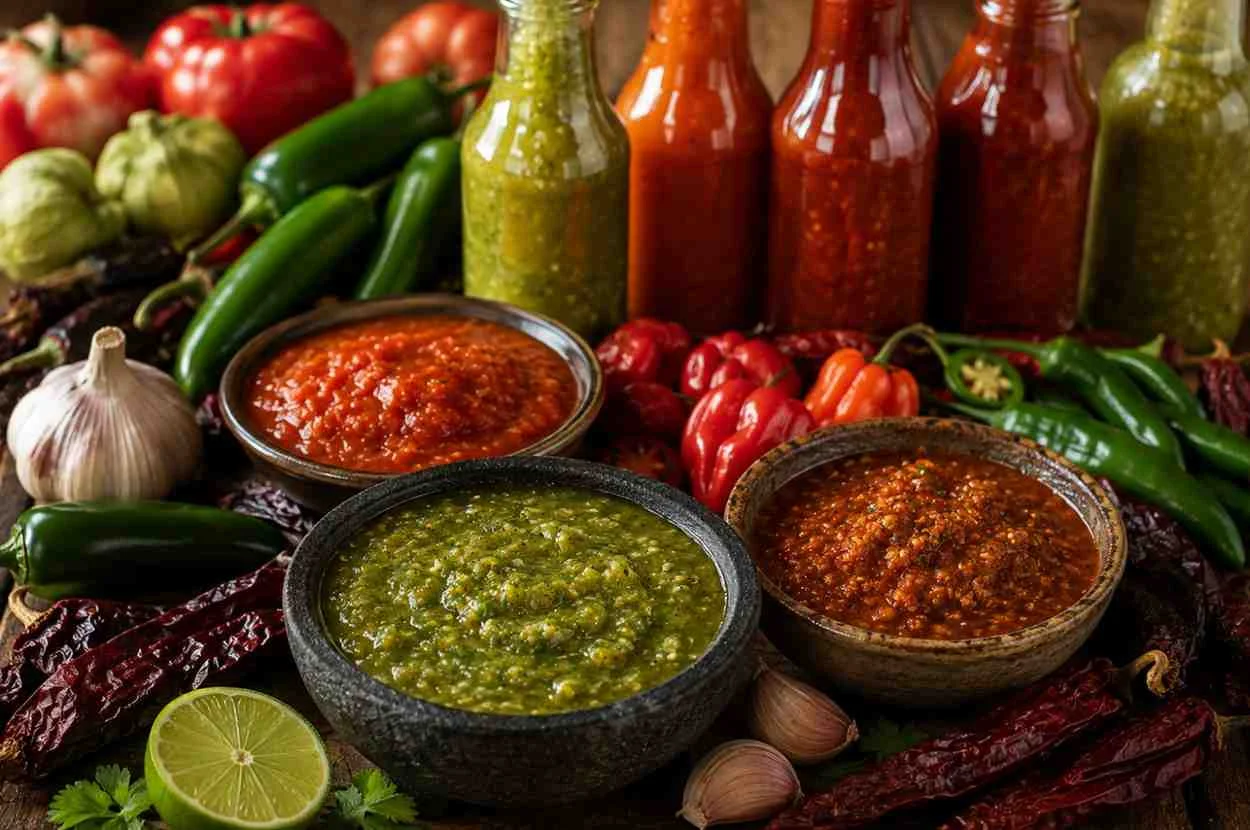
Mexican hot sauce is generally a chile-based condiment prepared with fresh or dried chiles and other ingredients that balance heat with flavor. Depending on the style, those ingredients can include tomatoes, tomatillos, garlic, onion, lime juice, vinegar, salt, and herbs. Another important distinction is that Mexican hot sauce isn’t necessarily designed simply to make food as spicy as possible. Chile flavor, acidity, aroma, and balance matter just as much as heat.

Traditional Ingredients
Traditional Mexican hot sauces vary from one preparation to another, so it’s more useful to understand the role of each ingredient than to expect one universal recipe.
| Ingredient | Role in Mexican Hot Sauce |
| Fresh chiles | Bright chile flavor and heat |
| Dried chiles | Concentrated, earthy, fruity, or smoky notes |
| Tomatoes | Body, sweetness, and acidity |
| Tomatillos | Tartness and fresh flavor |
| Garlic | Savory depth |
| Onion | Aroma and natural sweetness |
| Vinegar | Sharp acidity |
| Lime juice | Fresh, bright acidity |
| Salt | Balances the overall flavor |
| Herbs | Freshness and aroma |
The chile normally provides the foundation, while the supporting ingredients determine how that heat tastes.

For example, a tomato-based sauce can have more body and natural sweetness, while a tomatillo-based sauce tends to be brighter and tangier. Vinegar creates a sharper finish, while lime provides a fresher acidity.
Garlic and onion can be used raw or cooked. Roasting them produces a deeper, sweeter flavor, while fresh versions give the sauce a sharper character.
You don’t need a long ingredient list to make a flavorful hot sauce. In fact, a simple combination of a well-chosen chile, acidity, garlic, and salt can be more balanced than a sauce overloaded with ingredients.
Mexican Chile Peppers
Chiles are the defining ingredient in Mexican hot sauce. The variety you choose affects not only how hot the sauce becomes but also its aroma, color, sweetness, smokiness, and overall character.

1: Jalapeño
Jalapeños provide moderate heat and a fresh green flavor. They are a good choice for everyday sauces when you want noticeable warmth without overwhelming the food.
They work especially well with tomatillos, garlic, onion, and lime.
2: Serrano
Serrano chiles generally provide more heat than jalapeños and have a crisp, fresh chile flavor.
They are particularly useful in green sauces where you want a stronger chile presence while maintaining a bright, fresh character.
3: Habanero
Habaneros are considerably hotter than jalapeños and serranos. What makes them especially interesting is their fruity aroma. That fruity heat also makes habaneros a great choice for a fresh habanero salsa recipe. Lime, vinegar, garlic, and slightly sweet ingredients can help balance the heat.

4: Chile de Árbol
Chile de árbol is a slender dried chile commonly associated with red sauces. It contributes a sharp heat and strong red color.
It can be used by itself or combined with milder dried chiles to create a more layered sauce.
5: Guajillo
Guajillo chiles are appreciated for their fruity, slightly earthy flavor rather than extreme heat.
They are useful when you want a red sauce with depth and moderate warmth. They can also add color and body when combined with other dried chiles.

6: Ancho
Ancho is the dried form of a poblano chile. It generally has mild heat with sweet, earthy, and dried-fruit notes.
Ancho is particularly useful when you want to increase the depth of a sauce without making it excessively spicy.
7: Chipotle
Chipotle is a smoked, dried jalapeño, so it brings a characteristic smoky flavor.
Chipotle-based hot sauces are especially suitable for grilled meat, tacos, beans, burgers, and roasted vegetables where a deeper flavor profile works well.
The important point is that choosing a chile should never be based only on heat. The flavor of the chile determines what kind of sauce you can build around it.

Red vs Green Hot Sauce
Red and green Mexican hot sauces often have different flavor profiles, although the color doesn’t automatically tell you how spicy the sauce will be.
Red Mexican Hot Sauce
Red sauces may use dried red chiles, ripe chiles, tomatoes, or combinations of these ingredients.
Depending on the recipe, they can have:
- Earthy chile notes
- Roasted flavors
- Smokiness
- Tomato sweetness
- Concentrated dried-chile flavor
- Medium to intense heat
Dried chiles are particularly useful when you want a sauce with depth and a more concentrated chile character.

Green Mexican Hot Sauce
Green sauces commonly feature fresh green chiles and tomatillos.
They often have:
- Bright acidity
- Fresh chile flavor
- Tangy notes
- Herbal character
- A lighter overall profile

Green sauce does not automatically mean mild. Serrano-based green sauces, for example, can have substantial heat. For a tomatillo forward version, explore our mexican green salsa recipe.
If you want freshness and acidity, a green sauce is often a good starting point. If you want smoky, earthy, or roasted flavors, a red sauce may be more suitable.
Popular Mexican Hot Sauce Styles
Mexican hot sauce includes a broad range of preparations rather than one standard style.
Salsa Verde-Style Sauce
This style commonly combines tomatillos with green chiles, onion, and garlic. The ingredients can be blended raw for a fresh flavor or roasted first to create more depth.
It works well with tacos, eggs, chicken, seafood, and vegetables.

Chile de Árbol Sauce
A chile de árbol sauce focuses on the sharp heat and flavor of dried chiles. It can be simple but intense, so it is often best added gradually.
Habanero Sauce
Habanero sauces are designed for people who enjoy substantial heat. The fruity character of the chile can be balanced with lime, vinegar, garlic, or other ingredients.
Chipotle Sauce
Chipotle-based sauces have a recognizable smoky flavor. They are particularly good with foods that can handle a deeper, roasted profile, including grilled meats, beans, tacos, and roasted vegetables.
Roasted Chile Sauce
Roasting chiles, tomatoes, tomatillos, garlic, or onions before blending creates charred and savory notes.
This is one of the simplest ways to give a sauce more depth without adding many additional ingredients. If you are curious about how a bottled Mexican hot sauce gets its flavor, see what Valentina hot sauce contains.

Mild to Extra-Hot Heat Levels
Mexican hot sauce can range from gentle warmth to extremely intense heat.
| Heat Level | General Character | Good Starting Foods |
| Mild | Gentle warmth and chile flavor | Eggs, rice, tacos |
| Medium | Noticeable but balanced heat | Chicken, beans, tacos |
| Hot | Strong chile presence | Grilled meats, seafood |
| Extra-hot | Intense heat | Small amounts as a finishing sauce |

The actual heat of a sauce can vary even when the same chile variety is used. Growing conditions, ripeness, preparation, and the amount of chile all influence the final result.
For a family meal or gathering, serving the sauce separately is often the easiest approach because everyone can control the amount.
Best Foods to Serve With Mexican Hot Sauce
Mexican hot sauce can be used with far more than tacos. The best pairing depends on the flavor of the sauce as well as its heat.
Tacos
Use red, green, smoky, or fresh sauces depending on the filling. Beef and grilled meat can handle deeper smoky sauces, while fish and shrimp often benefit from brighter chile flavors.

Eggs
Green hot sauces are especially good with scrambled eggs, fried eggs, breakfast burritos, and other savory breakfast dishes.
Grilled Meat
Chipotle and roasted red chile sauces can complement grilled beef, chicken, and pork because their deeper flavors work well with charred food.

Seafood
Bright green or citrus-forward sauces can add acidity and heat to shrimp and fish without making the seafood taste heavy.
Beans and Rice
A small amount of hot sauce can transform simple beans and rice by adding acidity and chile flavor.
Quesadillas
The acidity of hot sauce helps balance the richness of melted cheese.
Roasted Vegetables
Try it over roasted potatoes, corn, cauliflower, peppers, or zucchini for an easy flavor boost.

Soups
A few drops stirred into soup can add heat and acidity without changing the entire character of the dish.
Best Uses of Mexican Hot Sauce
Mexican hot sauce is more versatile than simply being a taco topping. Its combination of chile flavor and acidity makes it useful in several ways.
Finishing Food
Add the sauce immediately before serving when you want its fresh chile and acidic character to remain noticeable.

Seasoning Tacos
Serving hot sauce separately allows everyone to adjust the heat of individual tacos.
Adding Flavor to Breakfast
Mix it into eggs, breakfast burritos, beans, or other savory breakfast dishes.
Using It in Marinades
Chile-based sauces can add flavor to chicken, meat, seafood, or vegetables before cooking.
Boosting Soups and Stews
A small amount can add warmth and acidity to beans, soups, and stews.
Building Dips
Mix hot sauce with sour cream, mayonnaise, avocado, or another creamy base to create a quick spicy dip.
Enhancing Snacks
Use it with quesadillas, chips, corn, roasted potatoes, and other savory snacks.
The amount you need depends on the sauce. A powerful habanero sauce may require only a few drops, while a mild jalapeño sauce can be used much more generously.
How to Choose a Mexican Hot Sauce
The easiest way to choose a Mexican hot sauce is to consider what you’re eating first, then decide how much heat you want.
For Breakfast
A mild or medium green sauce works well with eggs and breakfast burritos.
For Grilled Meat
Choose a smoky red chile or chipotle sauce if you want a deeper flavor.
For Seafood
A bright, acidic green sauce can complement shrimp and fish without overpowering their natural flavor.
For Cheese-Rich Foods
Choose a sauce with noticeable acidity to balance the richness of cheese.
For Everyday Meals
A medium-heat sauce is generally versatile enough for several types of food.
For Serious Heat
Habanero-based sauces are a good option for people who already know they enjoy intense spice.
When buying a bottled sauce, look at the main chile, heat level, acidity, texture, and ingredient list. Don’t choose based only on how high the heat rating sounds.
Store-Bought vs Homemade
Both store-bought and homemade Mexican hot sauces can have a place in the kitchen.
Store-Bought Hot Sauce
Bottled sauce is convenient, consistent, and ready whenever you need it.
When comparing products, consider:
- Main chile variety
- Heat level
- Acidity
- Salt level
- Texture
- Ingredient list
A longer ingredient list isn’t automatically a problem, and a short ingredient list isn’t automatically better. The most important consideration is whether the sauce provides the flavor you want.
Homemade Hot Sauce
Homemade sauce gives you control over almost every part of the finished condiment. A tradional mexican hot sauce recipe is a great starting point when you want to experiment with different chiles, acidity and heat levels.
You can adjust:
- Chile variety
- Heat level
- Garlic
- Acidity
- Roasting level
- Salt
- Texture
You can also combine chiles to create a more balanced flavor. For example, a mild chile can contribute body and aroma while a hotter chile provides additional heat.
If you’re experimenting at home, change one major variable at a time. That makes it easier to understand which chile or preparation method produced the flavor you prefer.
How Mexican Hot Sauce Is Traditionally Used
Mexican hot sauce is commonly served as a condiment at the table, allowing each person to control how much heat they want.
This approach is practical because people have very different spice preferences. Instead of making the entire dish hot, the sauce can be added individually.
Common uses include:
- Drizzling over tacos
- Serving with eggs
- Adding to soups
- Pairing with grilled meat
- Serving with seafood
- Mixing into beans
- Adding to quesadillas
- Serving with tortas
- Finishing roasted vegetables
The style of sauce can also influence the best use. Smoky sauces tend to work well with grilled foods, while bright green sauces can bring freshness to eggs, chicken, and seafood.
What Makes Mexican Hot Sauce Different?
Mexican hot sauce stands out because chiles are treated as a source of flavor as well as heat.
A habanero can contribute fruity intensity, chipotle can provide smoke, dried chiles can offer earthy depth, and fresh serranos can create a bright green character. Tomatillos contribute tartness, while lime or vinegar provides the acidity needed to balance the heat.
Preparation creates another layer of difference. Raw ingredients can produce a bright and fresh result, while roasting or toasting can bring out deeper, sweeter, and slightly charred flavors.
This is why there isn’t one correct Mexican hot sauce. Two sauces can use completely different chiles and still fit within the broad category while serving different culinary purposes.
From a cooking perspective, the most useful approach is to think about balance rather than maximum heat. A good sauce should make you want another bite of the food rather than make the heat the only thing you notice.
Frequently Asked Questions
What is Mexican hot sauce made of?
Mexican hot sauce can be made from fresh or dried chiles combined with ingredients such as tomatoes, tomatillos, garlic, onion, vinegar, lime juice, and salt. The exact ingredients depend on the style.
Is Mexican hot sauce always spicy?
No. It can range from mild to extremely hot. The heat depends mainly on the type and amount of chile used.
What is the difference between red and green Mexican hot sauce?
Red sauces often use dried or ripe red chiles and may contain tomatoes, while green sauces commonly use fresh green chiles and tomatillos. Neither color automatically determines the heat level.
Which Mexican hot sauce is best for tacos?
The best sauce depends on the filling. Smoky red or chipotle sauces work particularly well with grilled meats, while fresh green sauces can be excellent with chicken, seafood, and vegetables.
Is Mexican hot sauce the same as salsa?
Not exactly. Hot sauce is often thinner and more concentrated, while salsa is commonly thicker and more substantial. However, the terminology can overlap between different preparations.
Can Mexican hot sauce be made at home?
Yes. Homemade versions can be quite simple. Chiles can be blended with ingredients such as garlic, onion, lime juice or vinegar, and salt. Roasting some ingredients can add extra depth.
Which chile is best for a mild Mexican hot sauce?
Jalapeños are a useful starting point when you want moderate heat and a fresh green chile flavor. The heat of individual peppers can still vary.
Which Mexican chile gives hot sauce a smoky flavor?
Chipotle is especially useful because it is a smoked, dried jalapeño. Roasting other ingredients can also create smoky and charred notes.
Can Mexican hot sauce be used in cooking?
Yes. It can be added to soups, beans, marinades, sauces, and other dishes. It can also be served after cooking as a finishing condiment.
How do I choose between red and green hot sauce?
Choose based on flavor as well as heat. Green sauces tend to provide brighter, tangier flavors, while red sauces can offer deeper, earthy, roasted, or smoky notes.
Final Note
Mexican hot sauce is best understood as a broad family of chile-based condiments, rather than one fixed recipe. Fresh and dried chiles, tomatillos, tomatoes, garlic, onion, lime, vinegar, and different cooking techniques can create sauces with completely different personalities.
When choosing one, don’t focus only on the heat level. Think about what you want the sauce to contribute to the meal. A fresh green sauce can brighten eggs or seafood, a smoky chipotle sauce can deepen grilled meat, and a chile de árbol sauce can provide a sharper heat.
For homemade sauce, start with a chile whose flavor you enjoy and build the acidity and aromatics around it. For bottled sauce, look beyond the heat rating and consider the chile variety, texture, acidity, and overall flavor.
Ultimately, the best Mexican hot sauce isn’t necessarily the hottest one. It’s the sauce that brings the right balance of chile flavor, acidity, aroma, and heat to the food you’re eating.