
Mexican green hot sauce is a bright, tangy chile sauce made primarily with fresh green peppers, often combined with tomatillos, garlic, onion, lime juice, and salt. It brings heat and acidity to food while keeping a fresh, lively flavor. This homemade version is flexible enough to adjust for your preferred heat and texture. Blend it completely smooth for a pourable table sauce, or pulse the ingredients briefly if you prefer a chunkier consistency.
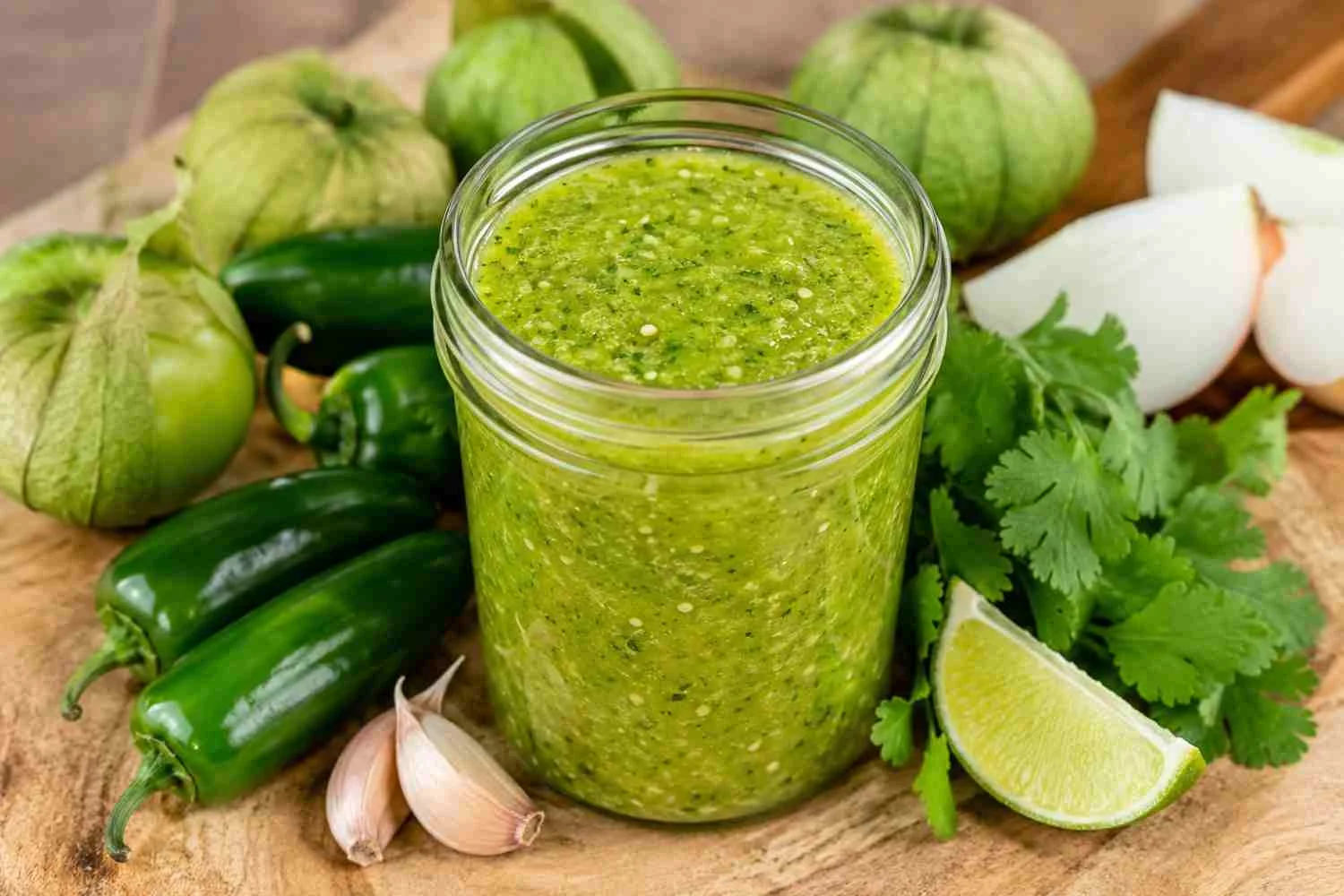
Ingredients
| Ingredient | Amount |
| Tomatillos, husked and rinsed | 6 |
| Jalapeños | 2–3 |
| Serrano peppers | 1–2 |
| Garlic cloves | 2 |
| White onion | ¼ medium |
| Fresh lime juice | 1–2 tbsp |
| Fresh cilantro | ¼ cup |
| Salt | ½–¾ tsp |
| Water | 2–4 tbsp, as needed |

Recipe
1. Prepare the Tomatillos and Chiles
Remove the papery husks from the tomatillos and rinse them well to remove their sticky coating. Cut larger tomatillos in half.
For a roasted version, arrange the tomatillos, jalapeños, serranos, and garlic on a baking sheet. Roast until the vegetables soften and develop lightly charred spots.
For a fresher flavor, simmer the tomatillos and chiles instead. Both methods work; roasting simply gives the finished sauce more depth.

2. Blend the Ingredients
Add the cooked tomatillos and chiles to a blender with the garlic, onion, cilantro, lime juice, and salt.
Blend until smooth.
If the sauce is thicker than you prefer, add water one tablespoon at a time until it reaches an easy-to-pour consistency.

3. Taste and Adjust
Taste the sauce before serving.
Add a little more lime juice if it needs brightness, or adjust the salt if the flavors seem flat. If you want more heat, blend in another serrano gradually.
Let the sauce rest for a few minutes before serving so the flavors can come together.

What Makes Green Hot Sauce Different?
Mexican green hot sauce is often brighter and more acidic than many red chile sauces. Fresh green chiles provide a clean, vegetal heat, while tomatillos contribute tartness and body.
The cooking method also changes the flavor. Charred tomatillos and peppers create deeper, slightly smoky notes, while simmered ingredients tend to retain a cleaner and fresher character.
The sauce is also highly versatile. It can complement delicate foods such as eggs and seafood while still standing up to richer dishes such as tacos, grilled chicken, and quesadillas.
Jalapeños vs Serranos
Both peppers work well, but they create different results.
Jalapeños generally provide moderate heat and a familiar green chile flavor. They are useful when you want a sauce that can be used generously.
Serranos are typically hotter and have a sharper, more intense green chile character.
For an everyday sauce, use mostly jalapeños with one or two serranos. If you prefer more heat, increase the serranos gradually.
The heat of individual peppers can vary, so taste carefully rather than assuming every pepper will have exactly the same intensity.

Tomatillos
Tomatillos give Mexican green hot sauce much of its distinctive flavor. They have a naturally tart taste and provide moisture and body to the sauce.
Choose firm tomatillos with fresh-looking green skin beneath their husks. Remove the husks and rinse them thoroughly before cooking.
Roasting produces a deeper flavor, while simmering gives you a cleaner and brighter result.
Controlling Heat
The easiest way to control the heat is by adjusting the type and quantity of chile.
For a milder sauce:
- Use more jalapeños and fewer serranos.
- Remove some or all of the chile membranes.
- Increase the amount of tomatillo slightly.
- Add the chiles gradually while blending.
For a hotter sauce:
- Increase the serranos.
- Keep more of the chile interior intact.
- Add another hot green chile if desired.
Don’t add every pepper at once if you’re unsure about the heat. Blend, taste carefully, and increase the chile gradually.

Balancing Acidity
Acidity keeps the sauce from tasting flat or overly heavy.
Tomatillos naturally provide tartness, while fresh lime juice gives a brighter finish.
If the sauce tastes too sharp, don’t immediately add sugar. First check whether it needs additional salt or more of the other ingredients. If it tastes dull, a small amount of lime juice can help bring the flavors forward.
The goal is balance rather than maximum sourness.
Smooth vs Chunky Texture
The texture depends mainly on how long you blend the ingredients.
Smooth Green Hot Sauce
Blend everything until completely uniform. This creates a thin, pourable sauce that works particularly well as a taco topping or table condiment.
Chunky Green Hot Sauce
Pulse the ingredients briefly rather than blending continuously. This leaves small pieces of chile, tomatillo, onion, and cilantro throughout the sauce.
A chunky version works well when you want more texture with tacos, grilled meats, or chips.
Best Mexican Foods to Serve With It

This sauce works especially well with foods that benefit from fresh acidity and green chile flavor.
- Tacos: Excellent with chicken, beef, fish, shrimp, and vegetables.
- Eggs: Add it to scrambled or fried eggs for breakfast.
- Quesadillas: The acidity balances melted cheese.
- Grilled chicken: Bright green chile flavor complements smoky grilled meat.
- Seafood: Tomatillo and lime work particularly well with shrimp recipe and fish.
- Beans and rice: A spoonful adds freshness to simple sides.
- Enchiladas: Use it as a finishing sauce or part of the dish.
- Roasted vegetables: Drizzle over potatoes, corn, peppers, or cauliflower.
Start with a small amount if you’re serving a delicate dish. You can always add more at the table.
Storage
Transfer the finished green hot sauce to a clean, airtight container and refrigerate it.
Because this homemade sauce contains fresh ingredients, refrigeration is important. Use a clean utensil whenever serving it and avoid leaving the sauce at room temperature for extended periods.
For the best quality, make a reasonable batch that you can use while it is fresh. If the sauce develops an unusual smell, appearance, or texture, discard it rather than tasting it to determine whether it is safe.
FAQs
Is Mexican green hot sauce spicy?
It can be mild, medium, or very hot. The final heat depends mainly on the type and amount of green chile used.
Can I make green hot sauce without serranos?
Yes. Use jalapeños alone for a milder sauce, or replace the serranos with another green chile according to your preferred heat level.
Do I have to roast the tomatillos?
No. Roasting gives the sauce deeper, slightly charred flavor, while simmering produces a fresher and cleaner taste.
Can I make this sauce less spicy?
Yes. Reduce the serranos, use more jalapeños, and adjust the chile quantity gradually until the heat suits you.
Why is my green hot sauce too sour?
Tomatillos and lime both contribute acidity. If the sauce tastes overly sharp, adjust the salt and consider adding more of the other ingredients to rebalance it.
Can I use green hot sauce as a marinade?
Yes. Its chile, lime, garlic, and tomatillo flavors can work well in marinades for chicken, seafood, meat, and vegetables.