
This Habanero Hot Sauce Recipe is designed for people who want serious chile flavor with adjustable heat. Habaneros are naturally hot, but they also have a distinctive fruity aroma that makes them more interesting than a sauce that delivers heat alone. The goal is to keep that fruitiness noticeable while balancing it with acidity, garlic, onion, and salt. This recipe produces a smooth, pourable sauce that works particularly well with tacos, grilled meats, eggs, seafood, and other foods that benefit from a bright, spicy finish.
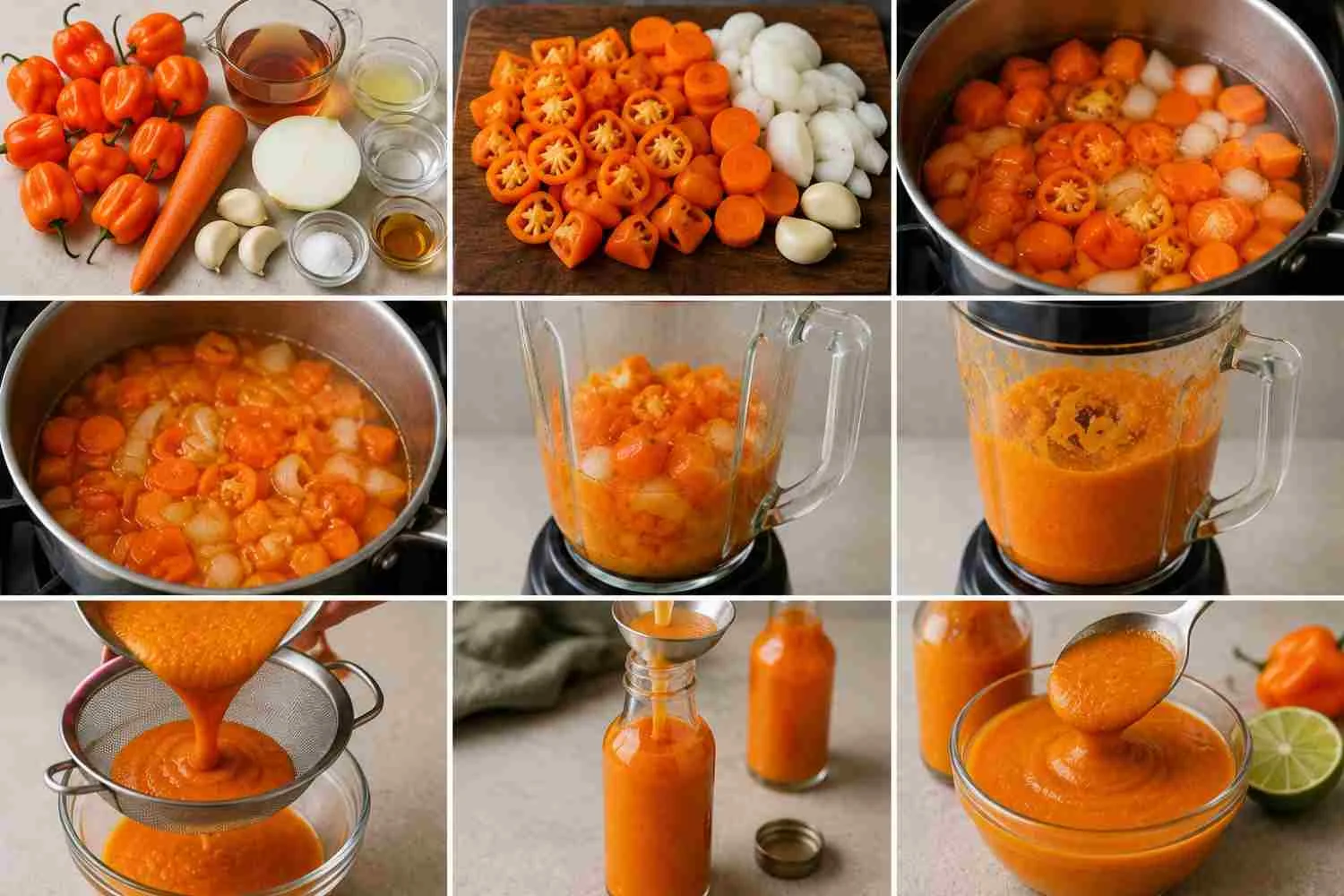
Ingredients
| Ingredient | Amount |
| Fresh habanero peppers | 8–10 |
| Carrots | 1 medium |
| White onion | ½ medium |
| Garlic cloves | 3 |
| Apple cider vinegar | ¾ cup |
| Fresh lime juice | 2 tbsp |
| Water | ½ cup |
| Salt | ¾ tsp |
| Honey | 1 tsp, optional |
| Olive oil | 1 tsp |
The carrots aren’t there simply for sweetness. They add body and help soften the intensity of the habaneros without masking their fruity character.

Apple cider vinegar provides the main acidity, while lime juice adds a fresher finish. A small amount of honey is optional if you want a slightly rounder sauce.
Preparing the Peppers
Habaneros deserve a little more care than mild peppers because their heat can transfer easily to your hands, utensils, and surrounding surfaces.
Wear food-safe gloves when handling them, particularly if you’re preparing a large batch. Avoid touching your eyes or face while working with the peppers, and wash your hands and equipment thoroughly afterward.
Remove the stems from the habaneros and roughly chop them.
You can leave the seeds and inner membranes intact for a hotter sauce. Removing some of the inner material can make the heat easier to manage.

Cooking the Sauce
Add the chopped habaneros, carrot, onion, garlic, vinegar, water, salt, and olive oil to a saucepan.
Bring the mixture to a gentle simmer over medium heat.
Reduce the heat and cook for approximately 10–15 minutes, or until the carrot and onion have softened.
Cooking the ingredients helps soften their texture and brings their flavors together. It also makes the vegetables easier to blend into a smooth sauce.
Avoid aggressively boiling the mixture. A gentle simmer is sufficient.
If the liquid evaporates too quickly, add a small amount of water. You want enough moisture for the blender to process everything easily without turning the sauce unnecessarily thin.
Add the lime juice toward the end of cooking rather than allowing it to cook for an extended period. This helps preserve its brighter character.

Blending
Allow the cooked mixture to cool slightly before transferring it to a blender.
Blend carefully until the sauce is completely smooth.
If it is too thick, add a little water at a time. Don’t add a large amount at once because it is easy to make a hot sauce thinner than intended.
For an especially smooth texture, strain the blended sauce through a fine-mesh sieve.
Straining is optional. Leaving the sauce unstrained gives it more body, while straining creates a smoother, more polished consistency that pours easily from a bottle.
Taste the sauce only after it has cooled enough to handle safely.

Balancing Habanero Heat
Habanero has a fruity flavor, but its heat can quickly dominate a sauce if the other ingredients aren’t balanced.
The easiest way to control the intensity is to adjust the ratio of habaneros to the other ingredients.
If the sauce is too hot, increase the amount of carrot, onion, or other non-hot ingredients rather than simply adding large amounts of water.
A little additional acidity can also make the flavor feel more balanced, although acidity doesn’t actually remove the chile’s heat.
Salt is another important part of the balance. A sauce that tastes overwhelmingly hot may sometimes simply need better seasoning.
Add adjustments gradually and blend again before making another change.
Adjusting Acidity
Acidity gives hot sauce its sharp, lively character and helps balance rich foods.
This recipe uses both apple cider vinegar and lime juice. They serve slightly different purposes.
Apple cider vinegar provides a stronger, sharper acidity and helps create the characteristic tang of a pourable hot sauce.
Lime juice contributes a fresher citrus note that works particularly well with Mexican-inspired dishes.
If the sauce tastes too sharp, add a little more of the cooked vegetable mixture or a small amount of water and taste again.
If it tastes flat, a little additional lime juice can brighten it.
Avoid adding a large amount of vinegar at once. It’s easier to increase acidity gradually than to correct an overly sour sauce.

Mild Habanero Version
A mild habanero sauce doesn’t mean removing the habaneros completely. The idea is to use their fruity flavor while keeping the overall heat more approachable.
For a milder batch:
- Use fewer habaneros.
- Remove some of the inner membranes.
- Increase the carrots.
- Add another small amount of onion.
- Keep the lime and vinegar balanced.
- Taste after blending before adding more chile.
You can also replace some of the habaneros with a milder pepper such as jalapeño.
This creates a sauce with recognizable habanero character without making heat the only noticeable feature.
A mild version is particularly useful as an everyday table sauce because you can use more of it on tacos, eggs, sandwiches, or grilled chicken.

Extra-Hot Version
If you specifically want a high-heat sauce, increase the habaneros gradually rather than dramatically changing the recipe.
For a hotter version:
- Use the higher end of the habanero range.
- Keep more of the inner pepper intact.
- Reduce the amount of carrot slightly.
- Add additional habanero only after tasting the first blended batch.
You can also combine habaneros with another very hot chile, but do this only if you’re comfortable handling and eating extremely spicy food.
An extra-hot sauce is best treated as a finishing condiment. A few drops can be enough to add substantial heat to an entire serving.
Choosing Fresh Habaneros
Fresh habaneros are the main source of heat and fruity flavor in this sauce, so choosing good peppers can make a noticeable difference in the finished result.
Look for habaneros that are firm, smooth, and brightly colored, with taut skin and no soft or watery areas. Avoid peppers with extensive wrinkling, mold, dark sunken spots, or signs of decay.
For a classic habanero flavor, fully mature orange habaneros are a popular choice. If you’re using another color or variety, keep in mind that flavor and heat can vary.
The number of peppers matters, but so does their individual intensity. Two habaneros from different batches can taste noticeably different, which is why it’s better to adjust the heat gradually during blending.
If you’re preparing the sauce for the first time, start with the lower end of the recipe’s pepper range. You can always blend in another habanero after tasting the cooked sauce, but reducing the heat after you’ve made it extremely spicy is much more difficult.
Because habaneros are very hot, wear gloves when preparing them and avoid touching your eyes or face. Wash cutting boards, knives, and other utensils thoroughly after handling the peppers.
Mexican Food Pairings
Habanero hot sauce has enough fruity intensity to work particularly well with bold, savory foods. or more chile based variations and different heat profiles, explore our classic mexican hot sauce recipe.
Tacos
Drizzle a small amount over chicken, beef, pork, fish, or shrimp tacos. Because habanero is powerful, start with less than you think you’ll need.
Eggs
A few drops can add heat and acidity to scrambled eggs, fried eggs, breakfast burritos, and other savory breakfast dishes.

Seafood
The combination of habanero and lime works especially well with shrimp and fish. The citrus helps keep the pairing bright rather than heavy. For a fresher green chile approach, Mexican salsa verde is another option worth exploring.
Grilled Meat
Use the sauce with grilled chicken, pork, or beef when you want a sharp, fruity chile finish alongside smoky flavors.
Quesadillas
The acidity of the sauce can balance rich melted cheese.
Rice and Beans
A small spoonful can add another layer of flavor to simple rice and beans.

Roasted Vegetables
Try it over roasted potatoes, corn, peppers, cauliflower, or other vegetables
FAQs
How hot is habanero hot sauce?
Habanero sauce is generally very spicy, but the final intensity depends on the number of peppers, their individual heat, and the amount of other ingredients used.
Can I make this habanero sauce less spicy?
Yes. Use fewer habaneros, remove some of the inner membranes, or replace part of the habanero with a milder chile such as jalapeño.
Why does my habanero sauce taste too hot?
The pepper ratio may be too high for your preference. Add more of the non-spicy cooked ingredients gradually and rebalance the acidity and salt.
Can I make habanero sauce without vinegar?
You can make a fresh chile sauce using lime juice or another acidic ingredient, but vinegar provides the sharp acidity and preservation characteristics commonly associated with many bottled-style hot sauces.
Should I remove habanero seeds?
You can, but removing seeds alone does not eliminate the heat. If you want to reduce intensity, reducing the amount of habanero is more effective.
Can I use frozen habaneros?
Yes. Frozen peppers can work, although their texture changes after thawing. Since the peppers are cooked and blended in this recipe, that texture difference is less important.
Can I make the sauce without carrots?
Yes. Carrots mainly contribute body and help soften the overall intensity. You can adjust the recipe with another suitable vegetable, although this will change the flavor and texture.
Why add lime juice?
Lime provides a fresh acidity that complements the fruity character of habaneros and works especially well with Mexican-inspired dishes.
What foods go best with habanero hot sauce?
Tacos, eggs, seafood, grilled meats, quesadillas, rice, beans, and roasted vegetables are all good starting points. Use the sauce gradually because habanero can easily dominate delicate foods.
How should homemade habanero sauce be stored?
Keep it refrigerated in a clean, airtight container. Homemade sauce should not automatically be treated as shelf-stable simply because it contains vinegar.
Final Thoughts
A good Habanero Hot Sauce Recipe should deliver more than intense heat. Habaneros have a naturally fruity character that becomes much more enjoyable when balanced with acidity, savory aromatics, salt, and enough body to soften the sharpness of the chile.
The recipe is easy to customize. Reduce the peppers for a more approachable everyday sauce, or increase them when you want a serious finishing condiment. Lime and apple cider vinegar provide two different types of acidity, while carrots and onion help create a smoother and more balanced flavor.
When serving the finished sauce, start small. A few drops may be enough for delicate foods, while tacos, grilled meats, and hearty dishes can handle a more generous drizzle. With the right balance, homemade habanero sauce can be fiery without sacrificing the bright, fruity flavor that makes the chile worth using.