
Red Mexican hot sauce, commonly known as salsa roja, is a versatile chile-based sauce with a bright, savory flavor and adjustable heat. Depending on the chiles used and whether they are roasted, toasted, or simmered, salsa roja can range from fresh and vibrant to deep, earthy, and smoky. This version focuses on building a balanced sauce rather than simply making it hot
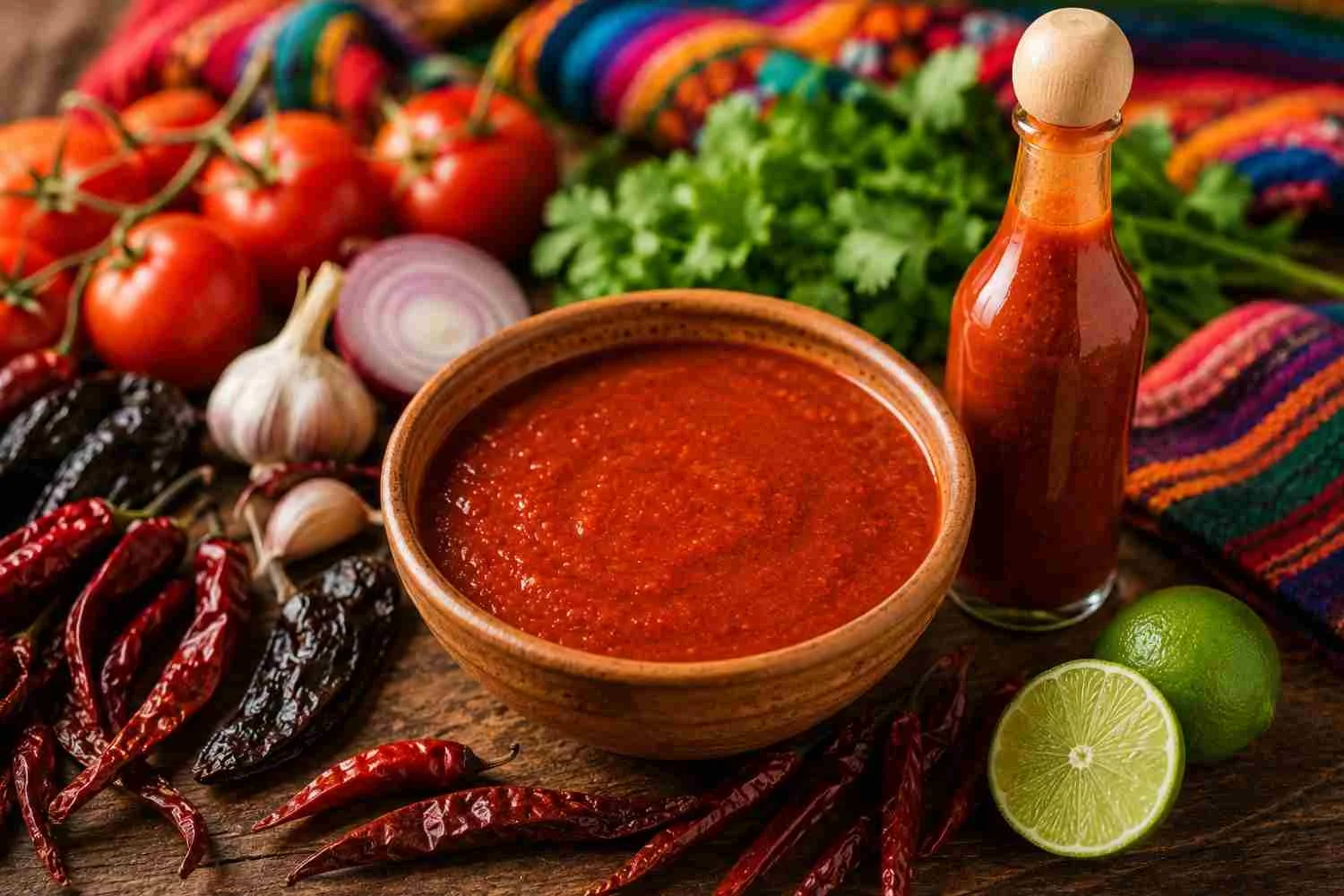
Recipe Overview
This Red Mexican Hot Sauce Recipe uses a simple cooking-and-blending method. The chiles are prepared first, then combined with tomatoes, aromatics, and seasoning before being blended into a smooth sauce.
The finished salsa roja should have enough body to coat food without becoming thick like a paste.
Recipe at a glance:
- Style: Mexican red chile sauce
- Texture: Smooth and pourable
- Flavor: Savory, earthy, tangy, and chile-forward
- Heat: Adjustable
- Best for: Tacos, eggs, enchiladas, grilled meats, rice, and beans
Ingredients
| Ingredient | Amount |
| Dried guajillo chiles | 4 |
| Dried ancho chiles | 2 |
| Ripe tomatoes | 3 medium |
| White onion | ½ medium |
| Garlic cloves | 2 |
| Fresh lime juice | 1 tbsp |
| Water | 1 cup |
| Salt | ¾ tsp |
| Mexican oregano | ½ tsp |
| Olive oil | 1 tsp |

Guajillo chiles provide a mild-to-moderate fruity chile flavor, while ancho chiles contribute deeper, earthy notes. This combination creates a more layered salsa than relying on one chile alone.
If you prefer more heat, you can add a hotter dried chile such as árbol.
How to Make Red Mexican Hot Sauce
Prepare the Chiles
- Remove the stems from the dried chiles.
- Shake out most of the seeds.
- Toast the chiles briefly in a dry skillet over medium-low heat.
- Turn them frequently so they become fragrant without burning.
- Transfer the toasted chiles to a bowl.
- Cover them with hot water and let them soften for approximately 15–20 minutes.
Don’t leave the chiles over high heat for too long. Burnt chiles can introduce a harsh bitterness that is difficult to correct later.

Cook the Vegetables
- Roughly chop the tomatoes and onion.
- Add the tomatoes, onion, and garlic to a skillet or saucepan.
- Cook until softened and lightly browned in places.
- Allow the vegetables to cool slightly before blending.
You can also roast the vegetables if you want a deeper, more developed flavor.
Blend Everything
- Drain the softened chiles.
- Add them to a blender with the cooked tomatoes, onion, garlic, oregano, salt, lime juice, and water.
- Blend until smooth.
- Add additional water gradually if the sauce is too thick.
- Taste and adjust the salt and acidity.
For an especially smooth salsa roja, pour the blended mixture through a fine-mesh strainer.

Finish the Sauce
- Heat the olive oil in a saucepan.
- Pour in the blended salsa.
- Simmer gently for approximately 5–10 minutes.
- Stir occasionally until the sauce reaches your preferred consistency.
- Taste once more before removing it from the heat.
This final simmer helps bring the ingredients together and gives the sauce a more cohesive flavor.
Building Deeper Flavor
The biggest difference between a basic red sauce and a memorable salsa roja often comes from how the individual ingredients are treated.
Toasting the dried chiles releases their aroma and gives them a more developed flavor. However, they should only be heated until fragrant. If they become blackened, the sauce can taste bitter.
Roasting the tomatoes concentrates their natural flavor and introduces subtle caramelized notes.
Cooking the onion and garlic softens their sharpness and allows them to blend more naturally into the sauce.

You can also build more depth by:
- Toasting the chiles separately from the vegetables.
- Roasting the tomatoes until lightly charred.
- Using a combination of mild and hotter chiles.
- Adding Mexican oregano toward the blending stage.
- Adjusting lime juice only after tasting.
- Simmering the blended sauce briefly before serving.
Don’t try to create depth by simply adding more spices. The chile preparation and cooking technique usually have a greater effect on the final flavor.
Best Red Chiles for Salsa Roja
The choice of chile determines much of the sauce’s personality.
Guajillo
Guajillo chiles are commonly used when you want a fruity, slightly tangy chile flavor with moderate heat.
They work well as the primary chile in a red sauce because they provide character without overwhelming the other ingredients.
Ancho
Ancho chiles are dried poblano peppers. They have a deeper, earthy flavor with mild heat.
They are particularly useful for adding body and complexity to salsa roja.
Árbol
Chile de árbol is significantly hotter than guajillo and ancho. Use it when you want to increase the heat without changing the overall sauce too dramatically.

Chipotle
Chipotle adds smoky, deeper notes because it is a smoked and dried jalapeño.
It can change the character of the sauce considerably, so use it when you specifically want a smoky red salsa.
Fresh vs Dried Chiles
Both fresh and dried chiles can produce excellent red sauces, but they create different results.
Dried chiles tend to provide concentrated flavor, deeper color, and earthy or fruity notes. They are particularly useful when you want a more developed chile profile.
Fresh red chiles generally provide a brighter, greener, more immediate pepper flavor. Their moisture content also changes the texture of the finished sauce.

If you prefer a bright, tomatillo style green hot sauce offers a different direction from this deeper salsa roja.
For a classic deep-red salsa roja, dried guajillo and ancho chiles are particularly useful.
For a fresher sauce, you can experiment with ripe red peppers alongside tomatoes.
The important thing is to choose the chile according to the flavor you want rather than assuming one type is universally better.
Adjusting the Heat
Salsa roja can be customized easily.
For a milder sauce:
- Use mostly guajillo and ancho chiles.
- Remove most of the seeds.
- Increase the tomato slightly.
- Avoid adding árbol chiles.

For more heat:
- Add one or two árbol chiles.
- Keep some of the chile seeds and membranes.
- Increase the hotter chile gradually.
- Taste after blending before adding more.
Remember that adding more hot chile is much easier than trying to rescue a sauce that has become overwhelmingly spicy. If you enjoy a fruitier chile with substantial heat, try this fresh salsa recipe for another spicy variation.
Acidity can make the heat feel more balanced, but lime juice doesn’t actually remove the chile’s heat.
How to Use Red Mexican Hot Sauce
Salsa roja is especially useful as a finishing sauce, but it can also become part of the cooking process.
Try it with:
- Tacos
- Enchiladas
- Breakfast eggs
- Chilaquiles
- Grilled chicken
- Beef
- Pork
- Rice and beans
- Quesadillas
- Roasted vegetables
For enchiladas, the sauce can be used to coat tortillas before filling and baking.
For tacos, drizzle it over the finished filling so the chile flavor remains noticeable.
For eggs and breakfast dishes, start with a small amount and increase according to taste.
Storage
Transfer cooled salsa roja to a clean, airtight container and refrigerate it.
Because this homemade sauce contains fresh ingredients, don’t assume it is shelf-stable simply because it contains chiles or lime juice.
For best quality:
- Keep it refrigerated.
- Use clean utensils.
- Avoid leaving it at room temperature for extended periods.
- Store it in a covered container.
If you want to preserve homemade salsa for long-term room-temperature storage, follow a tested food-preservation method rather than relying on the recipe alone.
FAQs
What is salsa roja?
Salsa roja is a Mexican-style red chile sauce. Recipes vary widely, but many versions use red chiles with tomatoes, garlic, onion, salt, and other seasonings.
Which chiles are best for salsa roja?
Guajillo and ancho chiles are excellent for a balanced red sauce. Árbol can be added when you want more heat.
Is salsa roja spicy?
It can be mild, moderate, or very hot depending on the chiles used. The heat is easy to adjust by changing the chile combination.
Can I make salsa roja with fresh chiles?
Yes. Fresh red chiles can create a brighter sauce, although dried chiles generally provide a more concentrated and earthy flavor.
Should I remove the seeds from dried chiles?
You can remove most of them to make the flavor and heat easier to control. Seeds aren’t the only source of chile heat, so the type and quantity of peppers still matter most.
Why does my red sauce taste bitter?
The most common issue is burning the dried chiles during toasting. Toast them briefly over moderate heat and remove them as soon as they become fragrant.
Can I make salsa roja without tomatoes?
Yes. Some Mexican red chile sauces rely primarily on dried chiles, garlic, spices, and liquid. Tomatoes add body, acidity, and natural sweetness but aren’t mandatory for every style.
Can I make the sauce smoother?
Yes. Blend thoroughly and strain the finished sauce through a fine-mesh sieve to remove remaining chile skin and seeds.
What is the difference between salsa roja and hot sauce?
The terms can overlap, but salsa roja often has a more substantial chile-and-vegetable character and may be served as a topping or cooking sauce. Bottled hot sauces are generally formulated as pourable table condiments.
Conclusion
A well-balanced Red Mexican Hot Sauce (Salsa Roja) is about much more than heat. Toasted chiles, roasted or cooked vegetables, garlic, onion, salt, and acidity work together to create depth while allowing the character of the peppers to remain noticeable.
Guajillo and ancho make a dependable base when you want fruity and earthy chile notes, while árbol can bring additional heat. Choosing between fresh and dried chiles also gives you control over whether the sauce tastes brighter or more concentrated.
The most important step is handling the chiles carefully. Toast them until fragrant rather than burnt, soften dried peppers properly, and adjust acidity and seasoning only after tasting the blended sauce.
Once prepared, salsa roja can become an everyday condiment for tacos, enchiladas, eggs, chilaquiles, grilled meats, quesadillas, rice, beans, and vegetables. Start with a moderate heat level, then customize future batches until you find the balance that suits your table.