
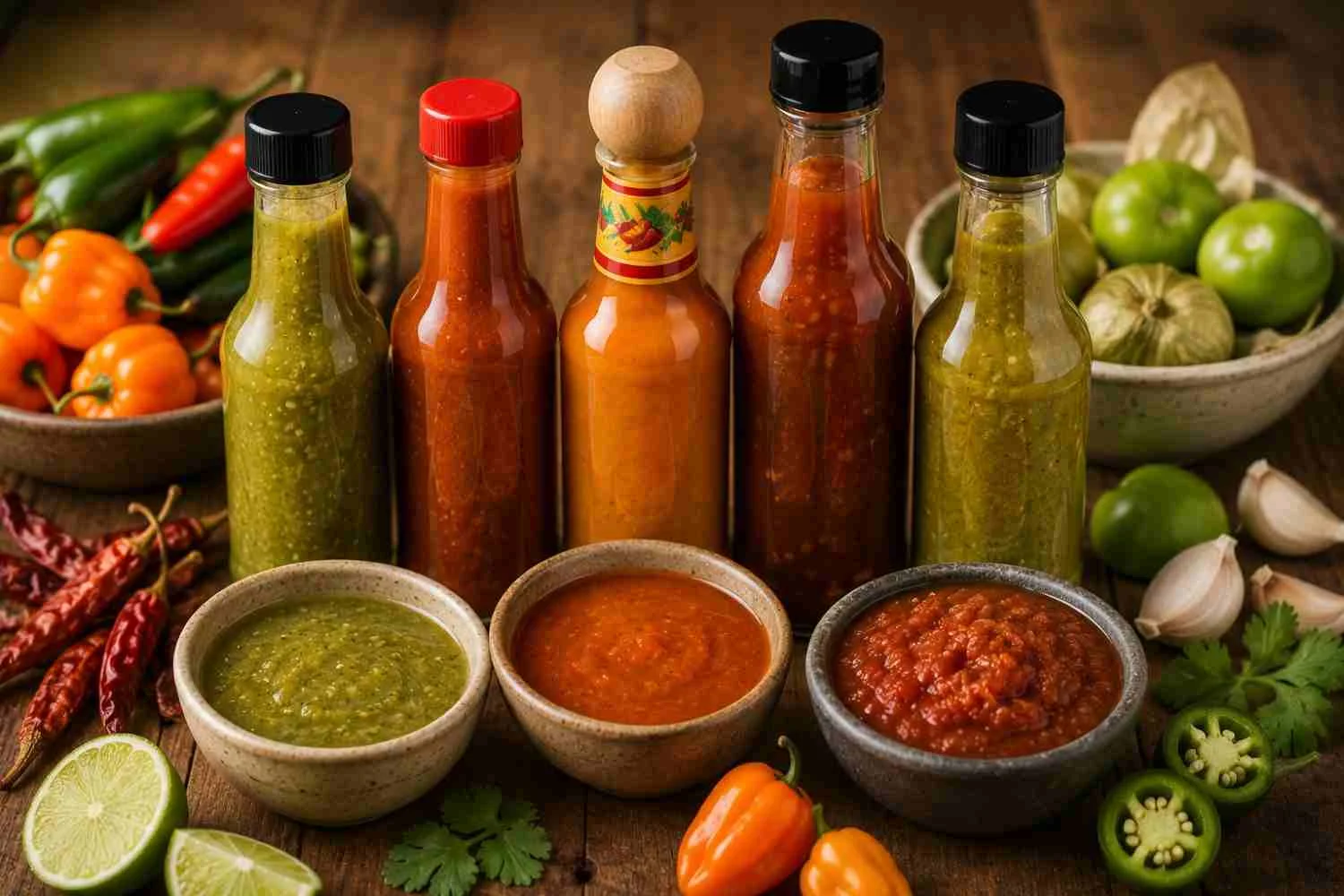
Mexican sauces are an essential part of the cuisine, bringing together chiles, tomatoes, tomatillos, herbs, spices, and aromatics in countless combinations. Some are bright and fresh, while others are smoky, roasted, creamy, or intensely spicy. The right sauce can completely change a simple taco, enchilada, egg dish, grilled meat, or bowl of beans.
What Are Mexican Sauces?
Mexican sauces are preparations used to season, cook, top, or finish food. Their ingredients and methods vary widely by region and dish.
A sauce may be made from fresh tomatoes and chiles, dried peppers, roasted vegetables, herbs, nuts, seeds, or a combination of these ingredients. If you ae looking for a practical version focused on chile flavor and heat, this homemade mexican hot sauce recipe is a good place to start.
Common components include:

- Fresh or dried chiles
- Tomatoes
- Tomatillos
- Onion
- Garlic
- Cilantro
- Mexican oregano
- Lime juice or another acidic ingredient
- Salt
- Spices and seeds
Some sauces are blended completely smooth, while others retain pieces of vegetables or chiles.
The cooking method also matters. Roasting creates deeper flavors, simmering softens ingredients, and using fresh ingredients can produce a brighter result.
Mexican Sauce vs Salsa
The terms sauce and salsa overlap, but they aren’t always used in exactly the same way.
Salsa commonly refers to a preparation served with or over food, often containing ingredients such as tomatoes, tomatillos, onions, and chiles. It may be chunky, finely chopped, or blended.
Mexican sauces can have a broader role. Some are used to cook meat, coat tortillas, build enchiladas, or create the foundation of a dish.

For example, a fresh tomato salsa may be served with tortilla chips, while a smooth red chile sauce may be used to cover enchiladas.
Texture isn’t the only difference. How the preparation is used is often just as important.
Red Sauces
Red Mexican sauces generally get their color from tomatoes, red chiles, or a combination of both.
A simple red sauce might use ripe tomatoes, garlic, onion, and fresh chiles. Another version can rely heavily on dried red chiles for a deeper, more concentrated flavor.
Red sauces can range from mild and fresh to smoky and intensely spicy.
They work particularly well with:
- Enchiladas
- Tacos
- Eggs
- Grilled meats
- Burritos
- Rice and beans

Roasting the tomatoes and chiles can add a subtle charred flavor, while dried chiles can contribute earthy, fruity, or smoky notes.
Green Sauces
Green Mexican sauces often use tomatillos and green chiles, although recipes vary considerably.
Tomatillos provide natural tartness, making green sauces particularly bright. Serranos and jalapeños can add fresh chile flavor and heat, while cilantro contributes an herbal note. For a brighter chile forward variation, try this green chile mexican sauce recipe made with fresh peppers and tomatillos
A basic green sauce may include:
- Tomatillos
- Serrano or jalapeño peppers
- Onion
- Garlic
- Cilantro
- Lime
- Salt
Green sauces are excellent with chicken, pork, seafood, eggs, tacos, enchiladas, and quesadillas.
Roasting the tomatillos creates a deeper flavor, while using them fresh produces a sharper and more vibrant sauce.

Chile-Based Sauces
Chile-based Mexican sauces focus primarily on the flavor of the peppers.
Fresh chiles can provide bright, vegetal notes, while dried chiles tend to offer more concentrated flavors.
Different chiles can contribute very different characteristics:
- Guajillo: fruity and mildly earthy
- Ancho: deep, rich, and relatively mild
- Chile de árbol: sharper and considerably hotter
- Chipotle: smoky and moderately hot
- Habanero: fruity with intense heat
Using more than one chile can create a layered flavor instead of relying on one pepper.
For a more detailed look at chile based Mexican condiments, explore this about different mexican hot sauce guide.

Habanero Sauces
Habanero sauces are known for combining fruity chile flavor with substantial heat.
Habaneros have a distinctive aroma that can make a sauce taste tropical and bright, particularly when paired with lime, citrus, or fruit.
Because habaneros are powerful, they’re often balanced with ingredients such as: For a fresh, chunky variation, try this classic habanero salsa recipe, which highlights the fruity character of the chile.

- Tomato
- Carrot
- Onion
- Garlic
- Lime
- Vinegar
- Tomatillo
A habanero sauce can be excellent with tacos, shrimp, fish, grilled chicken, eggs, and other foods that can handle strong chile flavor.
If you’re sensitive to heat, use a small amount or choose a sauce made with a greater proportion of mild peppers.
Roasted Chile Sauces
Roasting is one of the simplest ways to add depth to Mexican sauces.
Chiles, tomatoes, tomatillos, garlic, and onions can develop browned or lightly charred surfaces when roasted. For a bolder variation, try this dark Mexican chile salsa with tacos, grilled meats, or roasted vegetables.

That creates flavors that are more developed than those found in an entirely raw sauce.
Roasted chile sauces can have:
- Smoky notes
- Richer aromas
- Deeper vegetable flavor
- More concentrated sweetness
- A fuller finish
The goal isn’t to burn the ingredients. Excessive charring can make the sauce bitter.
Roasted sauces work especially well with grilled meats, tacos, enchiladas, eggs, and roasted vegetables.
Taco Sauces
Taco sauce doesn’t have to follow one specific recipe. The best choice depends on the filling.
Chicken Tacos
Green tomatillo sauces, roasted red sauces, and moderately spicy chile sauces all work well with chicken.
Beef Tacos
A deeper red chile sauce can stand up to the richer flavor of beef.
Fish Tacos
Tomatillo, lime, and moderate chile heat are particularly useful with fish.

Shrimp Tacos
A citrusy green sauce or habanero-lime sauce can complement shrimp without making the seafood feel heavy.
Vegetable Tacos
Roasted tomato sauces, green sauces, and smoky chile sauces can add depth to beans, potatoes, mushrooms, peppers, and corn.
Regional Styles
Mexican sauces vary considerably across the country, and there isn’t one universal “Mexican sauce.”
Different regions have developed their own ingredients, techniques, and flavor combinations.
Some preparations emphasize fresh chiles and tomatillos, while others use dried chiles, roasted ingredients, nuts, seeds, or spices.
For example, sauces associated with central and southern Mexican cooking may include complex combinations of dried chiles and other ingredients, while everyday table salsas can be much simpler.
Regional differences can also affect how a sauce is used. One preparation may be primarily a table condiment, while another is cooked directly with meat or used to coat tortillas.
This variety is one of the reasons Mexican sauces are better understood as a broad family of preparations rather than one particular flavor profile.
Best Sauce for Different Mexican Foods
Choosing a sauce becomes easier when you think about the flavor and richness of the main ingredient.
| Food | Sauce Style to Try | Why It Works |
| Chicken tacos | Green or roasted red | Adds brightness or depth |
| Beef tacos | Red chile sauce | Stands up to rich meat |
| Pork tacos | Green or fruity chile | Balances richness |
| Fish tacos | Tomatillo-lime | Fresh and acidic |
| Shrimp tacos | Green or habanero-lime | Bright with controlled heat |
| Enchiladas | Red or green sauce | Coats tortillas well |
| Eggs | Tomato or chile sauce | Adds acidity and warmth |
| Quesadillas | Green or red sauce | Cuts through melted cheese |
| Beans | Roasted chile sauce | Adds depth |
| Rice | Tomato or chile sauce | Adds moisture and flavor |
You don’t need to follow these combinations strictly. Personal preference matters, and changing the sauce is one of the easiest ways to make the same meal taste completely different.
How to Choose a Mexican Sauce
When deciding between sauces, consider three things: heat, acidity, and depth.
If you want something fresh and bright, look toward tomatillo-based green sauces.
If you prefer deeper and more earthy flavors, try a roasted red or dried-chile sauce.
For noticeable heat, choose a sauce built around chile de árbol or habanero.
For an everyday table condiment, a moderately spicy sauce with enough acidity can be more versatile than an extremely hot one.
Also consider texture. A smooth sauce is useful for drizzling and coating tortillas, while a chunky salsa is better when you want visible vegetables and texture.
FAQs
What are the main types of Mexican sauces?
Common categories include red sauces, green sauces, chile-based sauces, roasted sauces, habanero sauces, and sauces designed specifically for dishes such as tacos and enchiladas.
What is the most popular Mexican sauce?
There isn’t one sauce that represents all Mexican cooking. Preferences and traditional preparations vary by region, dish, and household.
Are Mexican sauces always spicy?
No. Some are very mild, while others contain extremely hot chiles. Heat depends largely on the peppers used and their proportions.
What makes Mexican sauces different?
Their wide range of chiles, preparation techniques, regional traditions, and uses gives Mexican sauces an exceptionally broad range of flavors and textures.
What’s the difference between red and green Mexican sauce?
Red sauces commonly rely on tomatoes, red chiles, or dried chiles, while green sauces frequently use tomatillos and green chiles. Their flavors can range from mild to very hot.
Which Mexican sauce is best for tacos?
It depends on the filling. Green sauces work well with chicken, pork, fish, and shrimp, while deeper red chile sauces can be excellent with beef and richer fillings.
What sauce goes well with enchiladas?
Both red and green sauces are traditional choices. Choose based on whether you prefer deeper chile and tomato flavors or a brighter tomatillo-based profile.
Can Mexican sauces be made ahead?
Many homemade sauces can be prepared ahead and refrigerated. Store them properly in clean, covered containers and follow safe food-storage practices.
Can I make Mexican sauce less spicy?
Yes. Use fewer hot chiles, replace some with milder peppers, or increase the amount of non-spicy ingredients such as tomatoes or tomatillos.
Conclusion
Mexican sauces offer far more variety than a simple distinction between “hot” and “mild.” Fresh tomatillos, ripe tomatoes, dried chiles, roasted vegetables, herbs, and spices can produce sauces that are bright, earthy, smoky, fruity, tangy, or intensely spicy.
The best sauce depends on the food you’re serving and the flavor you want to create. A bright green sauce can lift fish or chicken, a rich red chile sauce can complement beef and enchiladas, and a fruity habanero sauce can bring serious heat to tacos and seafood.
Once you understand the differences between red, green, chile-based, roasted, and habanero sauces, choosing the right Mexican sauce becomes much easier and experimenting with different combinations becomes part of the fun.