
This Habanero Salsa Recipe combines the fruity heat of fresh habaneros with tomatoes, onion, garlic, lime, and cilantro for a salsa that is bright, fresh, and seriously flavorful. Habaneros are much hotter than jalapeños, but their heat comes with a distinctive tropical-fruit character that makes them excellent for salsa when balanced properly. This recipe also gives you flexibility. Roast the ingredients for a deeper salsa, use fresh ingredients for a brighter flavor, blend everything smooth, or leave it chunky for a more rustic texture.
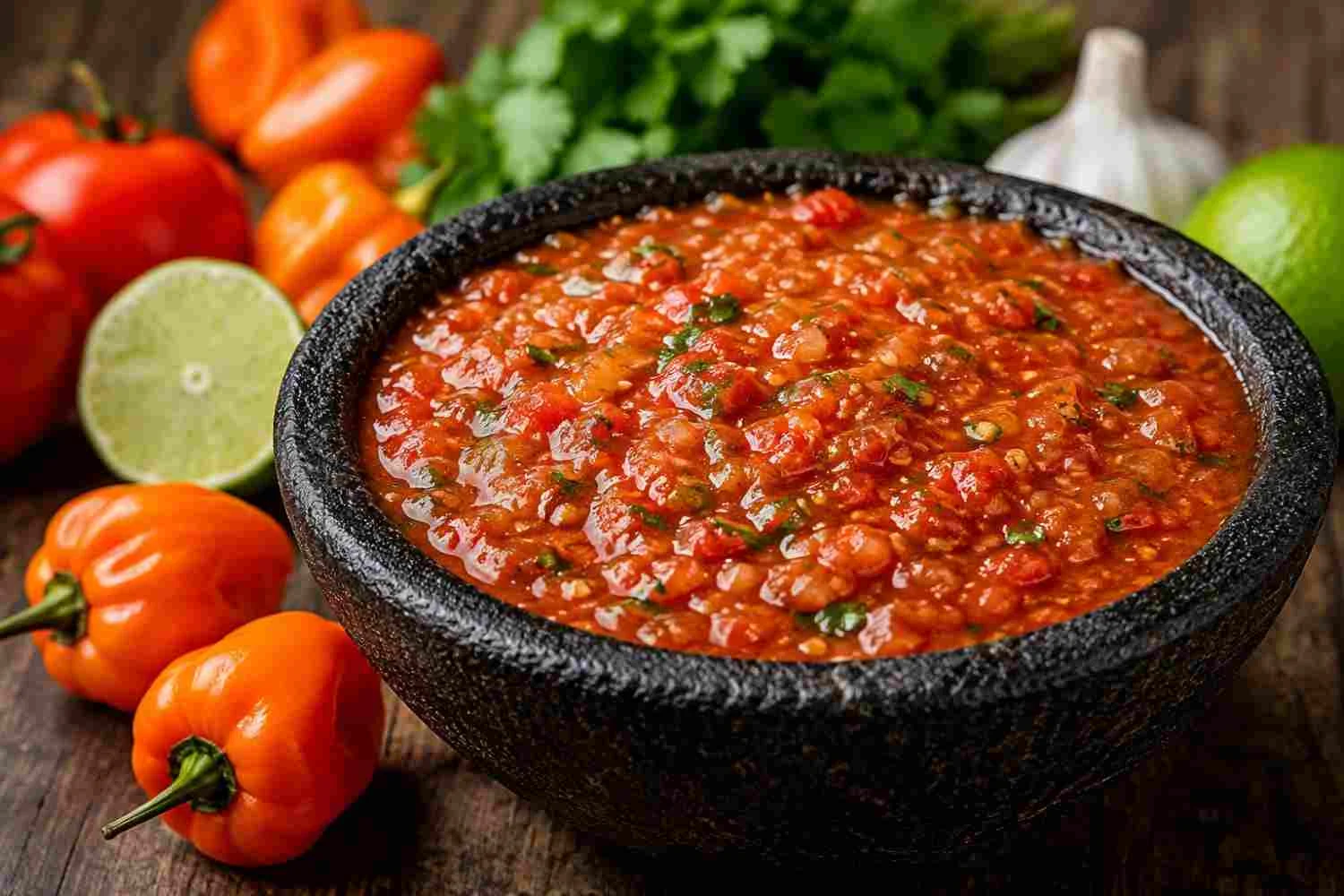
Habanero Salsa Recipe (Ingredients)
| Ingredient | Amount |
| Fresh habanero peppers | 2–4 |
| Ripe tomatoes | 4 medium |
| White onion | ½ medium |
| Garlic cloves | 2 |
| Fresh lime juice | 1–2 tbsp |
| Fresh cilantro | ¼ cup |
| Salt | ½–¾ tsp |
| Water | 1–2 tbsp, if needed |
The number of habaneros can be adjusted according to your preferred heat level. Two peppers provide noticeable habanero flavor, while four can create a much hotter salsa.
For a deeper flavor, roast the tomatoes, onion, garlic, and habaneros before blending.

Choosing Habaneros
Fresh habaneros determine much of the salsa’s heat and flavor, so choose peppers that look fresh and firm.
Look for habaneros with:
- Smooth, firm skin
- Bright, consistent color
- No soft or watery areas
- No mold
- No deep, sunken dark spots
- A fresh appearance rather than excessive wrinkling

Orange habaneros are a familiar choice because of their fruity flavor and intense heat, but other habanero varieties can also be used.
Keep in mind that heat varies from pepper to pepper. If you’re making the salsa for the first time, start with fewer habaneros and add more after tasting.
Because habaneros are extremely hot, wear food-safe gloves when handling them. Avoid touching your eyes or face, and wash your hands, knife, cutting board, and other equipment thoroughly afterward.
Step-by-Step Recipe
1. Prepare the Ingredients
Wash the tomatoes, habaneros, cilantro, and other fresh ingredients.
Remove the stems from the habaneros and roughly chop the peppers.
You can remove some of the inner membranes to make the salsa less intense, although reducing the number of habaneros is the more reliable way to control the overall heat.
Roughly chop the tomatoes and onion.

2. Roast the Vegetables
For a roasted salsa, arrange the tomatoes, habaneros, onion, and garlic on a baking sheet.
Roast until the vegetables soften and develop some charred spots.
The goal isn’t to completely burn them. You want enough browning to create a deeper, slightly smoky flavor.
Let the roasted ingredients cool slightly before blending.

3. Blend the Salsa
Add the tomatoes, habaneros, onion, garlic, lime juice, cilantro, and salt to a blender or food processor.
Pulse several times if you want a chunky salsa.
For a smooth salsa, blend continuously until the ingredients become evenly combined.
Add a small amount of water only if the salsa is thicker than you want.

4. Taste and Adjust
Taste the salsa carefully after it has cooled.
Adjust the ingredients gradually:
- Add more habanero for heat.
- Add lime juice for brightness.
- Add salt if the flavor seems flat.
- Add tomato for more body and to soften the chile intensity.
Allowing the salsa to rest for a few minutes before serving gives the flavors time to come together.
Controlling Heat
Habaneros are powerful peppers, so controlling the amount you use is important.
For a milder salsa:
- Start with one or two habaneros.
- Remove some of the inner membranes.
- Increase the amount of tomato.
- Add a little more onion.
- Use a milder pepper alongside the habanero.

For a hotter salsa:
- Increase the number of habaneros gradually.
- Leave more of the inner pepper intact.
- Add another habanero after tasting the first blended batch.
Don’t assume removing the seeds will make the salsa mild. The pepper itself is hot, so the quantity of habanero has the greatest effect.
Also remember that lime juice and tomatoes can balance the flavor of the heat, but they don’t actually remove the heat.
Tomato-Based Version
Tomato is one of the easiest ways to create a balanced habanero salsa.
Ripe tomatoes contribute:
- Natural sweetness
- Juiciness
- Body
- Acidity
- A familiar salsa flavor
For a deeper tomato salsa, roast the tomatoes until they develop browned or lightly charred areas.
For a fresher version, use the tomatoes raw and blend them directly with the other ingredients.

If the tomatoes are particularly juicy, you may not need any additional water.
This version is especially good with tacos, quesadillas, eggs, grilled chicken, beef, and tortilla chips.
Tomatillo Version
For a brighter and tangier variation, replace the tomatoes with tomatillos.
Tomatillos have a naturally tart flavor that works surprisingly well with the fruity heat of habaneros.
Roast the tomatillos with the habaneros, onion, and garlic for a deeper flavor, or simmer them if you prefer a cleaner and fresher result.
A tomatillo-habanero salsa is particularly good with:
- Fish tacos
- Shrimp
- Chicken
- Eggs
- Enchiladas
- Grilled vegetables
The acidity of the tomatillos helps keep the salsa lively and prevents the habaneros from tasting one-dimensional. If you enjoy fresh, tomatillo based then green salsa with tomatillos is another variation worth exploring

Chunky vs Smooth
The texture of habanero salsa can completely change how you use it.
Chunky Habanero Salsa
Pulse the ingredients instead of continuously blending them.
This leaves visible pieces of tomato, onion, chile, and cilantro.
Chunky salsa is excellent with tortilla chips and works well as a spoonable topping for tacos and grilled foods.
Smooth Habanero Salsa
Blend the ingredients until completely uniform.
A smooth salsa is easier to drizzle and can be used as a table condiment or spooned over dishes without large pieces of vegetables.
Neither texture is better. Choose based on how you plan to serve the salsa.
Taco Pairings
Habanero salsa can complement many taco fillings, but its fruity heat should be matched with the right ingredients.
Chicken Tacos
The bright heat of habanero works well with seasoned or grilled chicken, particularly when lime and fresh cilantro are included.

Beef Tacos
A tomato-based habanero salsa can stand up to the richer flavor of beef.
Shrimp Tacos
Habanero and lime make a particularly good combination with shrimp. A fresh or tomatillo-based salsa can keep the tacos bright.
Fish Tacos
Tomatillo-habanero salsa is a strong pairing for fish because the acidity cuts through the richness while adding heat.
Vegetable Tacos
Try a moderate amount of salsa with roasted potatoes, peppers, mushrooms, beans, or corn.
Because habanero is so hot, begin with a small spoonful and increase it according to your preference.

Serving Suggestions
Habanero salsa is useful far beyond tacos.
Tortilla Chips
Serve it as a spicy dip with warm tortilla chips. A chunky version works particularly well here.
Eggs
Add it to scrambled eggs, fried eggs, breakfast burritos, or huevos-style dishes.
Quesadillas
The acidity and heat help balance melted cheese.
Grilled Meat
Spoon it over grilled chicken, beef, pork, or other smoky foods.
Seafood
Use it with shrimp, fish, or other seafood where citrus and chile flavors complement the dish.
Rice and Beans
A spoonful can transform simple rice and beans with fresh acidity and heat.
Roasted Vegetables
Try it over potatoes, corn, cauliflower, peppers, or zucchini.
Burritos and Bowls
Add it as a finishing condiment to burritos, rice bowls, bean bowls, and other hearty meals.
What Makes Habanero Salsa Different?
The defining feature of habanero salsa is the combination of intense heat and fruity chile flavor. You can also turn that distinctive chile into a smoth hot sauce made with habaneros.
Jalapeño-based salsas often provide a greener, more familiar chile flavor, while habaneros bring a stronger tropical-fruit character alongside substantially more heat.
Tomatoes create a fuller, slightly sweeter salsa. Tomatillos provide sharper acidity and a fresher profile. Roasting adds depth and charred notes, while raw ingredients preserve a brighter flavor.
This means habanero salsa doesn’t have to taste aggressively hot. When balanced with tomato or tomatillo, lime, onion, garlic, cilantro, and salt, the chile can become part of a much more complex flavor profile.
Another advantage is versatility. A small amount can be used as a finishing condiment, while a milder version can be served more generously with chips, eggs, tacos, and other foods.
Storage
Transfer homemade habanero salsa to a clean, airtight container and refrigerate it.
Because this recipe uses fresh ingredients, don’t assume it has the shelf stability of commercially manufactured salsa.
For better quality:
- Keep it refrigerated.
- Use a clean utensil when serving.
- Avoid leaving it at room temperature for extended periods.
- Make a manageable batch if you plan to enjoy it fresh.
If the salsa develops an unusual smell, appearance, or texture, discard it rather than tasting it to determine whether it is still safe.
FAQs
Is habanero salsa very spicy?
It can be. Habaneros are naturally very hot, but the final intensity depends on how many peppers you use and how they are balanced with the other ingredients.
How can I make habanero salsa less spicy?
Use fewer habaneros, remove some of the inner membranes, or increase the amount of tomato or tomatillo. You can also replace part of the habanero with a milder chile.
Should I remove habanero seeds?
You can, but removing seeds alone doesn’t guarantee a mild salsa. The amount of habanero used has a greater effect on the overall heat.
Can I make habanero salsa without tomatoes?
Yes. Tomatillos are an excellent alternative and create a brighter, tangier salsa.
Is roasted or fresh habanero salsa better?
It depends on the flavor you prefer. Roasting produces deeper, slightly smoky notes, while fresh ingredients create a brighter and more vibrant salsa.
Can I make smooth habanero salsa?
Yes. Blend the ingredients until completely uniform. Add a little water only if necessary to reach your preferred consistency.
What is the best habanero salsa for tacos?
A tomato-based salsa works particularly well with beef and pork, while a tomatillo-habanero version is excellent with fish, shrimp, and chicken.
Can I use habanero salsa with eggs?
Absolutely. A small amount adds heat, acidity, and fruity chile flavor to scrambled eggs, fried eggs, and breakfast burritos.
How long does homemade habanero salsa last?
Keep it refrigerated in a clean, airtight container and follow safe food-storage practices. Because it contains fresh ingredients, don’t treat it as shelf-stable.
Final Thoughts
This Habanero Salsa Recipe is all about balancing the distinctive fruity flavor of habaneros with fresh or roasted ingredients. The peppers provide serious heat, while tomatoes or tomatillos, lime, onion, garlic, cilantro, and salt create a more complete flavor.
Start with a smaller amount of habanero if you’re unsure about the heat. Once you’ve found your preferred level, you can experiment with roasted tomatoes, tangy tomatillos, chunky textures, or a completely smooth salsa.
Serve it with tacos, eggs, seafood, grilled meats, quesadillas, beans, rice, or tortilla chips. The best habanero salsa isn’t necessarily the hottest batch—it’s the one where heat, acidity, fruitiness, and savory flavor work together.